Gaundar is also written as Gaundhar and occasionally Gondar in route descriptions. Uttarakhand Tourism commonly uses “Gaundhar”, while travellers may encounter all three spellings. They refer to the same important village stop on the Madhyamaheshwar trekking route.
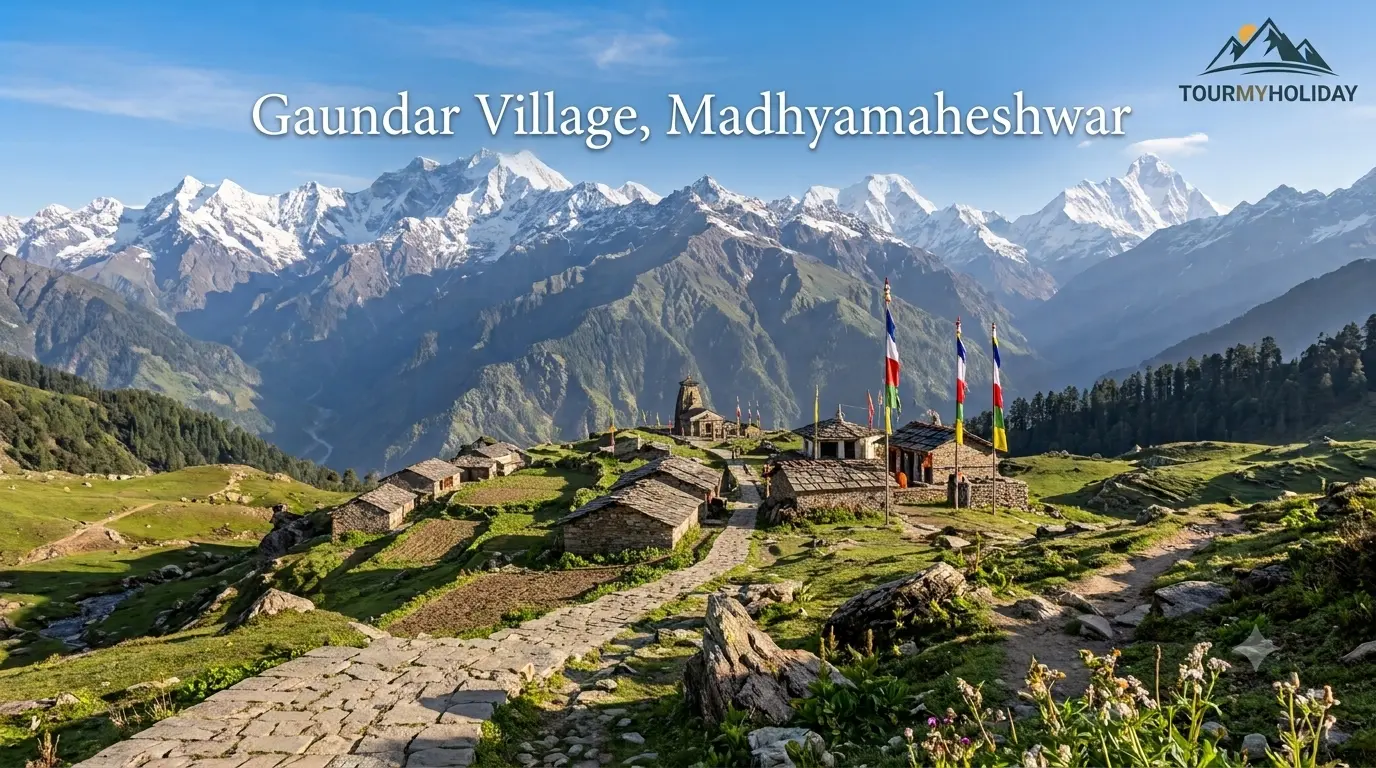
Hidden along the walking route to Madhyamaheshwar Temple, Gaundar Village is one of the small Himalayan settlements that gives the pilgrimage much of its character.
Travelers generally encounter Gaundar after leaving Ransi Village and descending into the lower section of the Madhyamaheshwar trekking valley.
Unlike Ransi, which functions primarily as the roadhead and starting base for the trek, Gaundar is reached entirely on foot. It gives trekkers a chance to slow down, experience a traditional mountain settlement, eat simple local food, find basic accommodation when available, and prepare for the more demanding sections farther along the trail.
Official Uttarakhand Tourism uses the spelling Gaundhar and places the village approximately 6 km after Ransi on the Madhyamaheshwar trekking route. You may also see the name written as Gaundar or Gondar in local travel references.
For travelers heading toward Madhyamaheshwar, Gaundar marks the transition between the approach from Ransi and the trail that continues toward Bantoli and the steeper mountain sections beyond.
Gaundar Village Quick Facts
Information | Details |
|---|---|
Village | Gaundar / Gaundhar |
District | Rudraprayag |
State | Uttarakhand |
Main Route | Madhyamaheshwar Trek |
Distance from Ransi | Approximately 6 km |
Access | Trekking only |
Previous Major Stop | Ransi Village |
Next Important Stop | Bantoli |
Accommodation | Basic local homestays or guesthouses when operating |
Food | Simple local meals and basic trek food |
Mobile Network | Unreliable; do not depend on continuous connectivity |
Best Trekking Period | Generally May–June and September–October |
Known For | Traditional village setting and Madhyamaheshwar trekking route |
The approximately 6 km Ransi-to-Gaundhar distance is documented by the official Uttarakhand Tourism Panch Kedar Circuit.
Where Is Gaundar Village?
Gaundar is a small mountain settlement in the Rudraprayag district of Uttarakhand, positioned along the trekking approach to Madhyamaheshwar.
You cannot drive directly to the village as part of the standard pilgrimage route.
Travelers first reach Ransi, leave the motorable road behind, and continue on foot toward Gaundar.
This location gives the village a very different character from road-connected Himalayan settlements. There are no large hotels, shopping streets, or commercial tourist facilities.
Instead, the surroundings are shaped by forested slopes, mountain paths, traditional homes, agricultural land, and river valleys typical of this part of the Garhwal Himalayas.
Anyone planning the journey from the roadhead should first read our dedicated Ransi Village Guide.
Why Is Gaundar Important on the Madhyamaheshwar Trek?
Gaundar's importance comes primarily from its position on the trekking route.
It acts as a natural intermediate settlement between Ransi and the upper trail toward Madhyamaheshwar.
For some trekkers, Gaundar is simply a rest stop.
For others, especially those following a slower itinerary, it can serve as an overnight halt that breaks the journey into more manageable sections.
Your itinerary should depend on your fitness, starting time, weather, and available daylight rather than how quickly another traveler completed the route.
Ransi to Gaundar Village Trek
The journey to Gaundar begins from Ransi, where the motorable approach ends and the trekking experience properly begins.
According to the official Uttarakhand Tourism Panch Kedar route information, Gaundhar lies approximately 6 km beyond Ransi.
The first section moves away from the road-connected settlement and into the mountain landscape.
Rather than expecting a continuously flat walk, travelers should prepare for uneven Himalayan terrain, stone paths, sections of descent, and subsequent climbing.
This first stage is useful for understanding your natural trekking pace before tackling the tougher portions farther along the Madhyamaheshwar route.
Start from Ransi reasonably early and walk at a steady pace instead of attempting to complete the section quickly.
Carry drinking water and snacks even if you expect food to be available farther along the route.
During rain, slow down considerably on wet stone and muddy sections.
If you are carrying a heavy backpack, remember that even relatively short distances can become tiring on continuous mountain terrain.
Travelers preparing for the physical demands of the journey can use our 30-Day Madhyamaheshwar Trek Fitness Plan.
Gaundar to Bantoli: What Comes Next?
After Gaundar, the trail continues toward Bantoli, another important landmark on the Madhyamaheshwar route.
Bantoli is significant because the trail reaches the river-confluence area before beginning the more demanding climb toward the upper sections of the trek.
Our detailed Madhyamaheshwar Trek Guide places Gaundar before Bantoli and describes Bantoli as the area associated with the meeting of the Martyenda Ganga and Madhyamaheshwar Ganga.
This distinction is useful when planning the route:
Gaundar is an important village stop, while Bantoli is the major confluence-area landmark farther along the trail.
What Is Gaundar Village Like?
The appeal of Gaundar lies in its simplicity.
This is not a purpose-built tourist destination. It is a traditional mountain settlement located along a pilgrimage trail.
Travelers should expect a quieter and more basic environment than Ukhimath or Ransi.
The village setting can include traditional Himalayan houses, small agricultural areas, forested slopes, and simple family-operated facilities serving pilgrims and trekkers moving between Ransi and Madhyamaheshwar.
The experience is therefore less about conventional sightseeing and more about understanding how communities live along a remote Himalayan pilgrimage route.
Spending time here also gives travelers an opportunity to support local families directly through locally operated food and accommodation services.
Accommodation in Gaundar Village
Basic accommodation may be available in Gaundar, particularly during the active Madhyamaheshwar trekking and pilgrimage season.
Expect simple homestays and locally operated rooms, not conventional hotels.
Typical facilities may include:
Simple rooms
Basic bedding
Limited bathroom facilities
Home-style meals
Limited electricity
Limited charging opportunities
Little or no dependable internet
Local hospitality
Facilities can vary by season, demand, weather, and individual property.
Do not assume that every property or room mentioned online will be operating when you arrive.
For more detailed accommodation planning across Ukhimath, Ransi, Gaundar, Bantoli, and Madhyamaheshwar, use our Complete Madhyamaheshwar Trek Accommodation Guide.
Food in Gaundar Village
Food options in Gaundar should be approached with realistic expectations.
This is a remote trekking village, so meals are generally simple and focused on warmth and energy rather than large restaurant-style menus.
Depending on what is operating during your visit, travelers may find basic home-cooked meals such as dal, rice, roti, seasonal vegetables, tea, and other simple trekking staples.
Availability can change.
If you have allergies, medical dietary needs, or very specific food requirements, carry suitable backup food from Ransi or Ukhimath.
High-energy snacks such as nuts, energy bars, and dry fruit are also useful during the trekking day.
Facilities Available in Gaundar
Gaundar has limited infrastructure compared with road-connected towns.
Travelers should plan on the assumption that only essential facilities may be available.
What You May Find
Basic homestays or guest rooms
Home-cooked meals
Tea and simple refreshments
Small quantities of basic supplies
Local information about trail conditions
What You Should Not Depend On
ATM availability
Reliable card payments
Continuous UPI connectivity
Strong mobile data
Large medical facilities
Pharmacies with extensive stock
Luxury accommodation
Large grocery stores
Withdraw sufficient cash and purchase important medicines or supplies before beginning the trek.
Ukhimath is a better place to organize major supplies before moving toward the trail.
Mobile Network and Electricity in Gaundar
Mobile connectivity becomes increasingly unreliable as travelers move deeper into the Madhyamaheshwar trekking valley.
Treat any signal you receive in Gaundar as useful but temporary.
Before leaving Ransi:
Download offline maps if you use them.
Save important phone numbers.
Inform family members that communication may stop.
Carry a charged power bank.
Screenshot accommodation or booking information.
Keep emergency details available offline.
Do not make your safety plan dependent on mobile internet.
Best Time to Visit Gaundar Village
For most pilgrims and trekkers, Gaundar is visited as part of the seasonal Madhyamaheshwar journey.
May to June
This is one of the commonly preferred periods for the trek.
Conditions are generally more favorable than during peak monsoon, although Himalayan weather can still change unexpectedly.
July to August
Monsoon significantly changes the route.
Wet stone, mud, heavy rain, reduced visibility, swollen streams, and road disruption can make travel considerably more difficult.
If considering this season, read our dedicated Madhyamaheshwar Trek in July and Monsoon Guide.
September to October
Post-monsoon conditions are often preferred for trekking because the landscape is fresh and visibility can improve when the weather remains stable.
Regardless of the month, check current forecasts through the India Meteorological Department and confirm local trail conditions before leaving Ransi.
Should You Stay Overnight in Gaundar?
Not every trekker needs to stay overnight in Gaundar.
Whether you should stop depends on your itinerary, fitness, departure time, weather, and accommodation availability.
An overnight stop can make sense if:
You prefer a slower trekking pace.
You started from Ransi later than planned.
Weather is deteriorating.
Someone in your group is tired.
You want to experience a traditional village stay.
Your itinerary intentionally divides the trek into shorter stages.
Stronger trekkers following a different schedule may continue farther along the route.
Avoid choosing an itinerary simply because another traveler completed it quickly.
Mountain pacing should depend on your own fitness and conditions on the day.
Gaundar Village During Monsoon
The village becomes especially green during monsoon, but the beauty comes with considerably greater trekking challenges.
Rain can make the route slippery, reduce visibility, affect streams, and disrupt road access in the wider region.
During rainy conditions:
Start early.
Wear shoes with reliable grip.
Use proper rain protection.
Keep clothes and electronics in waterproof bags.
Do not rush across wet stone.
Never cross a swollen stream simply because other people are doing so.
Follow current local advice.
If local authorities or residents advise against continuing, postpone the trek.
For detailed monsoon planning, read our Madhyamaheshwar Monsoon Trek Guide.
What to Carry from Ransi to Gaundar
Even though Gaundar is the first important village section after Ransi, carry essential items from the beginning.
Recommended items include:
Drinking water
Lightweight snacks
Rain jacket or poncho
Warm layer
Trekking shoes with good grip
Trekking poles if needed
Personal medicines
Basic first-aid supplies
Sunscreen
Sunglasses
Cap
Power bank
Cash
Offline route information
Small waste bag
Avoid overpacking.
Every unnecessary kilogram becomes more noticeable as the route becomes steeper beyond Bantoli.
Responsible Travel in Gaundar Village
Gaundar is someone's home before it is a trekking stop.
Treating the settlement respectfully is an important part of responsible Himalayan travel.
Ask permission before photographing residents closely.
Do not photograph inside homes without permission.
Avoid loud music.
Do not leave plastic bottles, food packets, or wet wipes on the trail.
Use local homestays and locally prepared meals where practical.
Do not contaminate streams with soap, detergent, or other chemicals.
Carry non-biodegradable waste back toward a proper disposal point.
The wider Madhyamaheshwar journey passes through environmentally sensitive Himalayan terrain, making low-impact travel especially important.
Gaundar, Ransi and Madhyamaheshwar: Understanding the Route
A simple way to understand Gaundar's role is:
Ukhimath → Ransi → Gaundar → Bantoli → Upper Trail → Madhyamaheshwar
Ransi is the main roadhead and trekking base.
Gaundar is an intermediate mountain village reached after beginning the trek.
Bantoli is the next important trail landmark associated with the river-confluence section.
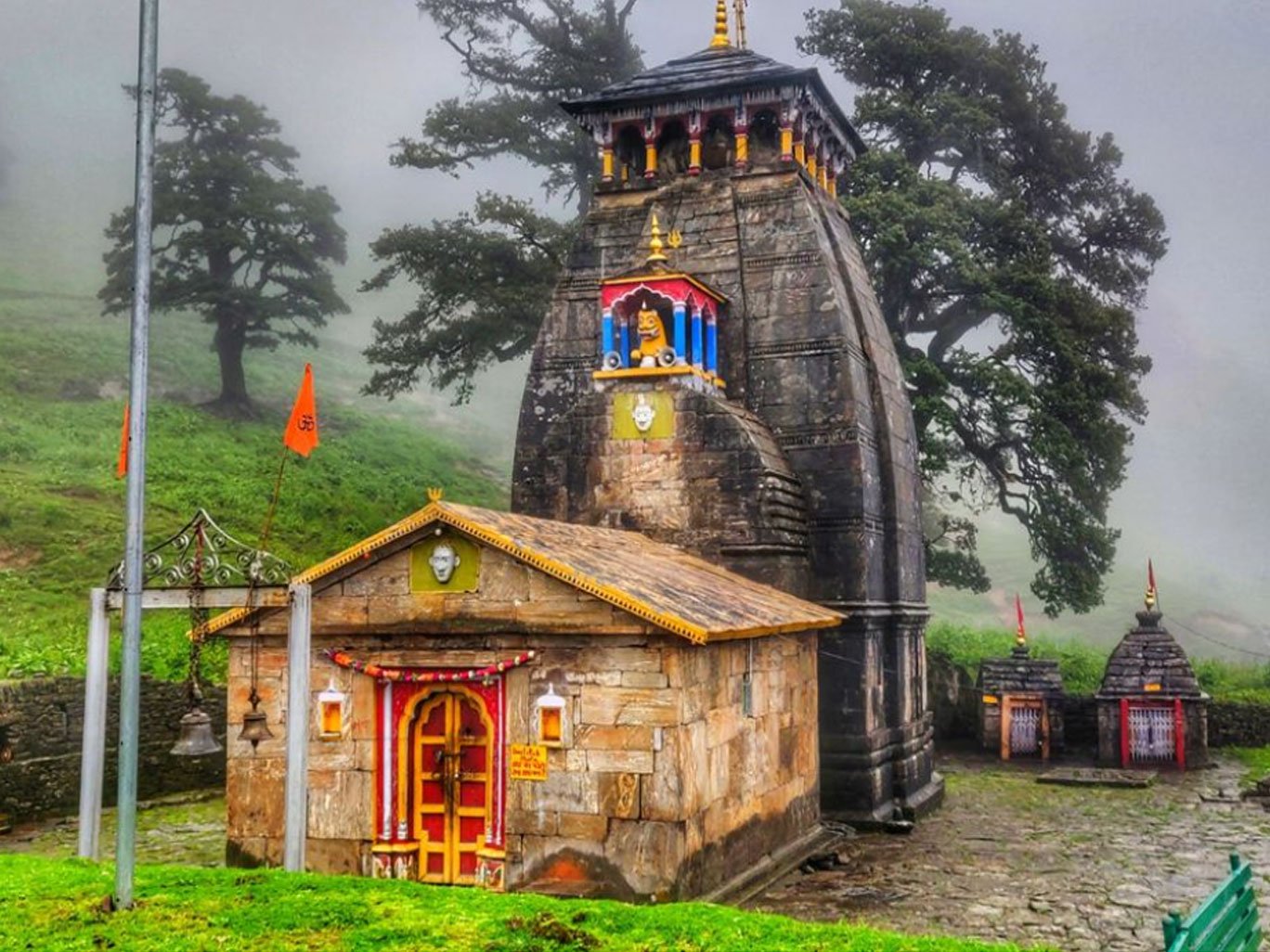
From the upper route, trekkers eventually reach Madhyamaheshwar Temple.
Travelers who continue beyond the main temple can also visit Budha Madhyamaheshwar Temple.
Gaundar Village FAQs
Where is Gaundar Village?
Gaundar is a small Himalayan village in Rudraprayag district, Uttarakhand, located on the trekking route between Ransi and Madhyamaheshwar.
How far is Gaundar from Ransi?
Official Uttarakhand Tourism's Panch Kedar circuit places Gaundhar approximately 6 km after Ransi on the trekking route.
Can I drive to Gaundar Village?
No. Travelers normally reach Ransi by road and continue toward Gaundar on foot.
Are Gaundar and Gaundhar the same place?
Yes. Gaundar, Gaundhar, and Gondar are spelling variations used for the same village on the Madhyamaheshwar trekking route. Uttarakhand Tourism uses the spelling Gaundhar.
Is accommodation available in Gaundar?
Basic local homestays or guest rooms may be available during the active trekking season. Availability can vary, so travelers should confirm current options before relying on an overnight stay.
Is food available in Gaundar?
Simple local meals and basic refreshments may be available when village stays and food points are operating. Carry some backup snacks rather than relying completely on availability.
What comes after Gaundar on the Madhyamaheshwar trek?
The route continues toward Bantoli, followed by the steeper upper trail toward Madhyamaheshwar.
Is Gaundar a good overnight stop?
It can be useful for travelers following a slower itinerary or anyone who prefers to divide the trek into shorter stages. Faster itineraries may continue farther depending on weather, fitness, and daylight.
Does mobile network work in Gaundar?
Connectivity should be considered unreliable. Carry offline information and inform family members beforehand that you may be unreachable during parts of the trek.
What is the best time to visit Gaundar?
May–June and the post-monsoon period around September–October are generally more practical than peak monsoon, subject to current route and weather conditions.
Final Thoughts
Gaundar Village may be small, but it is an important part of what makes the Madhyamaheshwar journey different from a conventional pilgrimage. The village marks the point where travelers are fully immersed in the walking route, away from roads and larger settlements. For some, it is a short rest stop. For others, it becomes a memorable overnight halt filled with simple food, quiet mountain surroundings, and local hospitality. Most importantly, Gaundar should not be viewed simply as another distance marker between Ransi and Madhyamaheshwar. It represents the traditional Himalayan communities that make remote pilgrimage routes possible.
Plan conservatively, respect residents, carry the supplies you genuinely need, and confirm current trail conditions before leaving Ransi.
For official route information, travelers can also consult the Uttarakhand Tourism Panch Kedar Circuit.