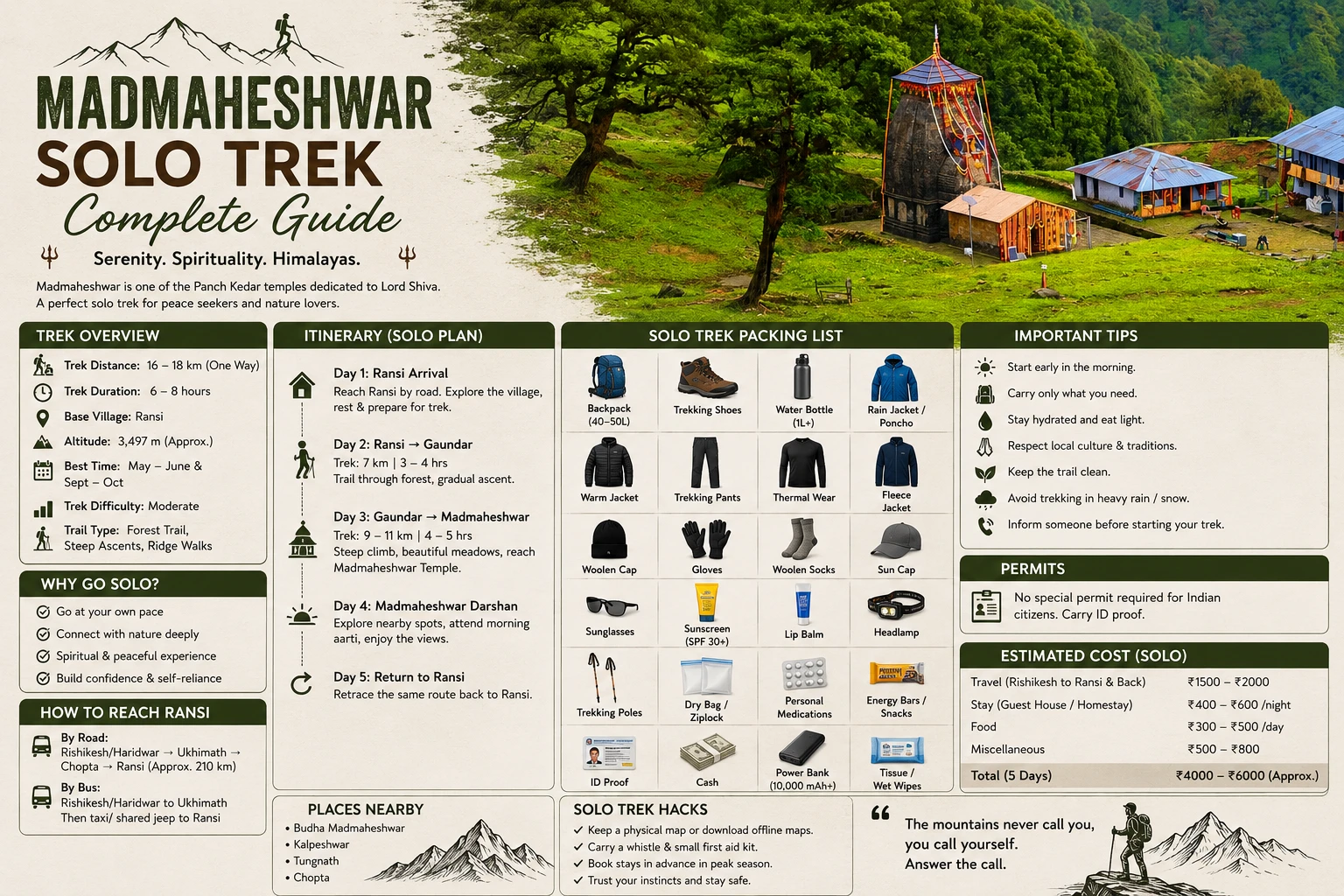
A solo Madhyamaheshwar trek can be a rewarding way to experience one of Uttarakhand's Panch Kedar shrines at your own pace. Travelling alone, however, requires more preparation than joining an organised group because you are responsible for your transport decisions, accommodation, communication, personal belongings and response to unexpected changes.
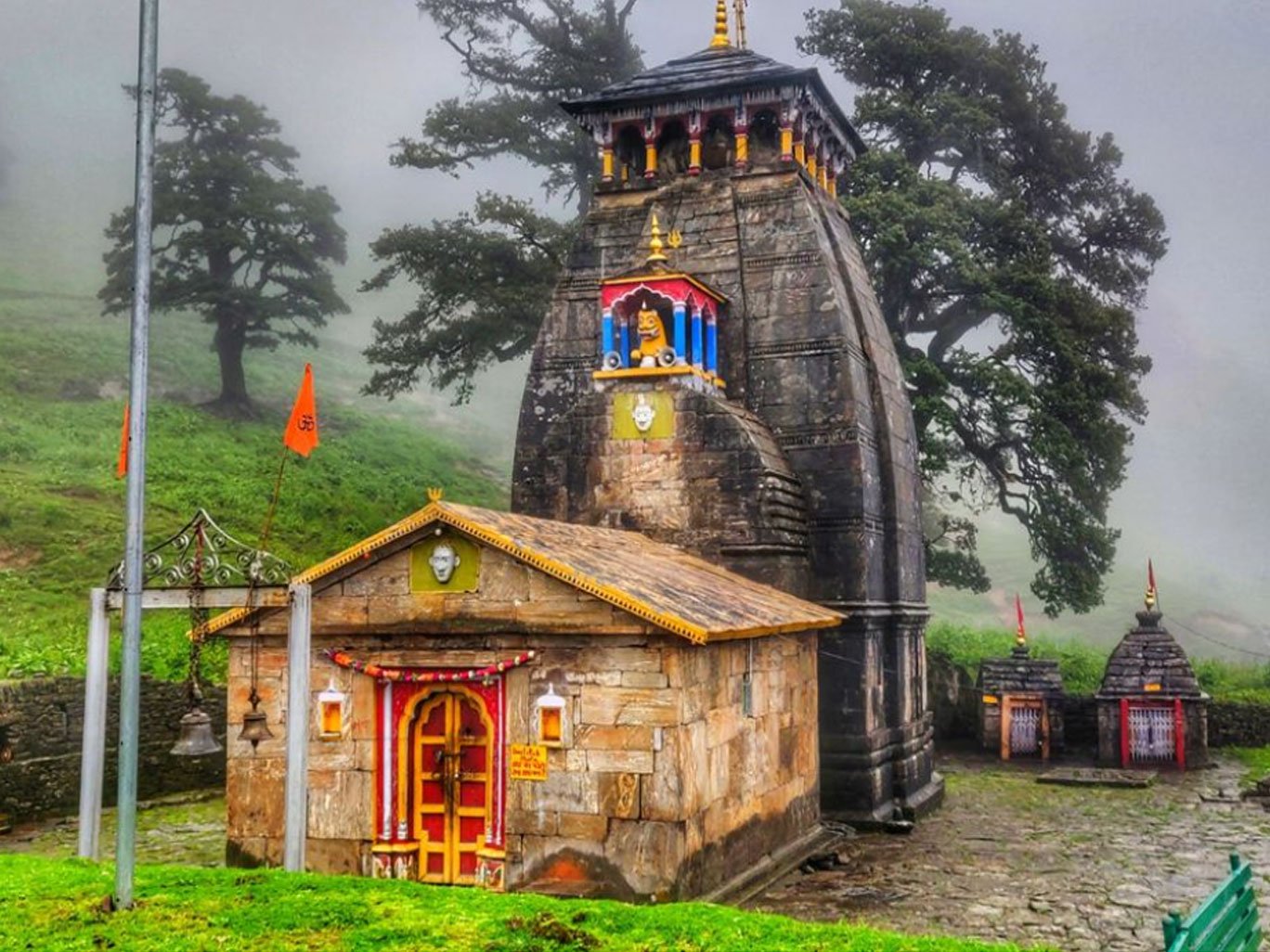
Madhyamaheshwar is a high-altitude Shiva temple in Rudraprayag district, Uttarakhand. Ransi is commonly used as the practical base for the present-day trek. The destination combines a remote Himalayan setting with an active pilgrimage tradition, so solo travellers should plan for both the trekking conditions and the limited services available in the higher sections.
This guide focuses specifically on the practical considerations of travelling to Madhyamaheshwar alone. It does not replace the detailed route, distance, difficulty, packing or cost guides available elsewhere on the site.
Is Madhyamaheshwar Trek Suitable for Solo Travellers?
Madhyamaheshwar can be undertaken independently by experienced travellers who are comfortable managing a multi-day mountain journey without a group.
Solo travel can provide greater flexibility over walking pace, rest breaks and daily decisions. It also means that you cannot rely on companions to carry extra supplies, navigate an unexpected change or assist immediately if you become unwell or injured.
Before choosing a solo trek, consider your previous experience with long walks, mountain travel and travelling without a companion. If you are unfamiliar with Himalayan trekking, travelling with an experienced group or local guide may be a more appropriate option.
What Makes a Solo Madhyamaheshwar Trek Different?
The main difference is responsibility. When travelling in a group, decisions about transport, accommodation and timing are often shared. On a solo trip, you need to make those decisions yourself.
A solo traveller should be prepared to:
Confirm transportation before starting the journey
Arrange accommodation at suitable halts
Keep track of personal belongings
Carry sufficient food and water between reliable facilities
Monitor weather and local conditions
Maintain communication where possible
Leave enough flexibility for delays
Know when to stop rather than pushing ahead because of a fixed schedule
Solo trekking does not necessarily mean being isolated throughout the journey. During the pilgrimage season, other trekkers and pilgrims may be travelling along the same route, and local accommodation providers can also provide useful information.
Planning Your Solo Journey to Ransi
Ransi is commonly used as the practical starting point for the present-day Madhyamaheshwar trek.
For a solo traveller, reaching the starting point is an important part of the planning process because mountain transport may not operate with the same frequency or predictability as transport in cities.
Confirm your intended road journey, final vehicle drop and accommodation before beginning the walking section.
For detailed transportation options, see our How to Reach Madhyamaheshwar from Delhi, Haridwar, Rishikesh & Dehradun guide.
Do not build a solo itinerary around the assumption that every vehicle will be available exactly when expected. Keeping some flexibility in the schedule is particularly useful in mountain regions.
Solo Travel and Accommodation
Solo travellers should confirm accommodation before starting the trek, particularly during busy pilgrimage periods.
Ransi and other settlements along the journey may have basic homestays or pilgrim accommodation, while options become more limited closer to the temple.
When staying alone, tell the accommodation provider your approximate plans for the following day. If you change your route or expected arrival time, update them where possible.
For detailed information about accommodation locations, see our Madhyamaheshwar Accommodation Guide.
Food and Supplies for Solo Travellers
A solo traveller should not assume that food or essential supplies will be available exactly when needed.
Carry enough lightweight snacks for unexpected delays and keep your water arrangements in mind throughout the journey. Basic meals may be available at local homestays and seasonal facilities, but services can vary.
Before leaving a settlement, check where your next reliable food or water opportunity is expected to be. This is especially useful when travelling alone because there is no companion who can share supplies if plans change.
Keep snacks easily accessible rather than storing everything at the bottom of your backpack.
Mobile Network and Communication
Mobile connectivity can become unreliable in remote Himalayan areas. A solo traveller should therefore avoid depending entirely on mobile internet for navigation, bookings or emergency communication.
Before leaving an area with reliable connectivity:
Download important travel information
Save accommodation contact details
Save important phone numbers
Keep booking confirmations available offline
Inform a trusted person about your planned route
Carry your phone fully charged
Carry a power bank
Where connectivity is available, update your trusted contact if your plans change significantly.
Do not assume that a particular network or location will always provide coverage. Mountain conditions and network availability can vary.
Solo Trek Safety
The most important safety principle for solo trekking is to avoid turning a manageable delay into an emergency.
Start walking with enough daylight available and avoid deliberately extending the journey late into the evening to maintain a fixed schedule.
If weather deteriorates, visibility drops or you feel physically unwell, reassess your plans instead of continuing simply because you have already started the day's walk.
Keep essential items such as your phone, identification, cash, medicines and headlamp accessible.
You should also avoid leaving the established route simply to find a shortcut. Mountain shortcuts can introduce unstable terrain or unfamiliar sections that are more difficult to manage alone.
For a separate assessment of the physical demands of the journey, see our Madhyamaheshwar Trek Difficulty Guide.
What to Do If You Need Help
A solo traveller should have a basic response plan before starting.
If you become unwell or injured:
Stop and assess the situation.
Move to a safer location if it is possible to do so without increasing the risk.
Contact your accommodation provider, travel companion, local support or emergency services where connectivity is available.
Inform your trusted contact about your situation.
Avoid continuing simply to stay on schedule.
Follow instructions from local authorities or experienced local personnel.
If another group of pilgrims or trekkers is nearby, you can also ask for assistance rather than attempting to handle a serious situation alone.
The best emergency plan is one prepared before the problem occurs.
Keeping Someone Informed
Before starting your trek, share your basic travel plan with someone you trust.
They should know:
Your expected starting point
Your approximate travel dates
Where you expect to stay
Your intended destination
When they should expect an update
How to contact you if they do not hear from you
You do not need to send constant updates. The purpose is to ensure that someone outside the trek knows your general movement and can recognise an unexpected communication gap.
Solo Trekking During Different Seasons
May and June
The early pilgrimage season can be suitable for solo travellers who are prepared for changing mountain conditions and colder temperatures at higher elevations.
Carry appropriate warm layers and rain protection rather than relying on lower-altitude temperatures as a guide.
July and August
Monsoon conditions require additional caution. Heavy rainfall can affect roads, walking surfaces and visibility.
Solo travellers should be particularly conservative with their plans during periods of poor weather because delays or route changes are more difficult to manage without a companion.
Check current weather and local conditions before starting.
September and October
Post-monsoon travel can offer another practical period for the pilgrimage, but weather remains changeable.
Carry both rain protection and suitable warm layers and allow flexibility in case transport or walking conditions change.
For detailed seasonal information, see our Madhyamaheshwar Weather Guide.
Solo Trek vs Group Trek
Factor | Solo Trek | Group Trek |
|---|---|---|
Walking pace | Fully flexible | Usually coordinated with the group |
Schedule | Easier to adjust personally | Depends on group plans |
Decision-making | Individual responsibility | Shared |
Emergency support | Limited to available local help | Companions can provide immediate assistance |
Accommodation | Must be managed independently | Often arranged collectively |
Cost sharing | Usually less opportunity to share private transport | Shared transport can reduce individual costs |
Social experience | More independent | More interaction with fellow travellers |
Planning requirement | Higher | Can be lower if organised |
Neither option is automatically better. The right choice depends on your trekking experience, comfort with independent travel and ability to manage unexpected changes.
Who Should Avoid Travelling Alone?
Solo travel may not be appropriate if you have little experience with long mountain walks, are uncomfortable travelling without reliable connectivity or are not confident managing changing plans independently.
Travellers with medical or mobility concerns should seek appropriate professional advice before undertaking a high-altitude trek.
Parents travelling with children should also assess the route, weather, accommodation and available support carefully rather than assuming that solo-style planning is suitable for a family journey.
Essential Preparation Before Leaving
A few checks before departure can prevent avoidable problems.
Confirm:
Your transport to the trek base
Accommodation arrangements
Current temple opening status
Weather conditions
Road access
Required documents or registrations
Phone and power-bank charge
Cash
Personal medicines
Emergency contact information
Keep copies of important booking details offline in case you lose connectivity.
For a detailed equipment checklist, see our Madhyamaheshwar Trek Packing List.
Is a Solo Madhyamaheshwar Trek Better Than a Package?
A solo trip gives you greater control over your schedule and allows you to make decisions independently. A package can reduce the amount of planning required for transportation, accommodation and coordination.
The right choice depends on how comfortable you are arranging the trip yourself.
If you have limited mountain-travel experience, an organised option may provide additional logistical support. Experienced travellers who prefer flexibility may prefer to arrange the journey independently.
The decision should be based on the level of planning and support you need rather than simply choosing the cheapest option.
Frequently Asked Questions
1. Can I do the Madhyamaheshwar Trek alone?
Yes, experienced travellers can plan an independent journey, but solo trekking requires greater responsibility for transportation, accommodation, communication, supplies and emergency planning.
2. Is Madhyamaheshwar safe for solo travellers?
Safety depends on weather, trail conditions, personal fitness, preparation and responsible decision-making. Solo travellers should avoid unnecessary risks and keep someone informed about their plans.
3. Should I tell someone before starting a solo Madhyamaheshwar Trek?
Yes. Share your approximate route, accommodation plans and expected travel dates with a trusted person before starting.
4. Can I find other trekkers on the Madhyamaheshwar route?
During the pilgrimage season, other pilgrims and trekkers may be travelling along the route. However, you should not depend on meeting other travellers for transportation, accommodation or emergency assistance.
5. Do I need a guide for a solo Madhyamaheshwar Trek?
Not every experienced trekker requires a guide, but travellers who are unfamiliar with Himalayan terrain or uncomfortable managing the journey independently may benefit from local or organised support.
6. Can I travel to Madhyamaheshwar alone without mobile network?
You should not depend entirely on mobile connectivity. Download important information in advance, save contact details offline and carry a charged phone and power bank.
7. Is solo trekking suitable for first-time Himalayan trekkers?
A first-time Himalayan trekker should carefully assess their experience, fitness and comfort with independent travel. If you are unfamiliar with mountain trekking, travelling with an experienced group or guide can provide additional support.
8. What is the biggest challenge of a solo Madhyamaheshwar Trek?
The biggest challenge is managing the journey independently when conditions change. Transport delays, weather changes, fatigue, limited connectivity and accommodation availability can require quick decisions.
Final Solo Trek Checklist
Before starting your Madhyamaheshwar journey alone, make sure you have:
Confirmed transportation
Accommodation arrangements
Valid identification
Sufficient cash
Charged phone
Power bank
Personal medicines
Emergency contacts
Weather-appropriate clothing
Rain protection
Reliable trekking footwear
Food and water arrangements
Offline travel information
A person informed about your itinerary
Solo trekking is most manageable when you plan for flexibility rather than trying to follow a rigid schedule. Keep your plans realistic, monitor changing conditions and be prepared to stop or adjust the journey when circumstances require it.