Packing for the Madhyamaheshwar Trek requires more planning than simply carrying warm clothes and trekking shoes. The journey moves through different terrain and weather conditions, while services become more limited as you move away from the road-connected areas.
A good packing strategy should keep the backpack practical without adding unnecessary weight. Your clothing, footwear, rain protection, personal medicines, documents, food and other essentials should be selected according to the season and duration of your trip.
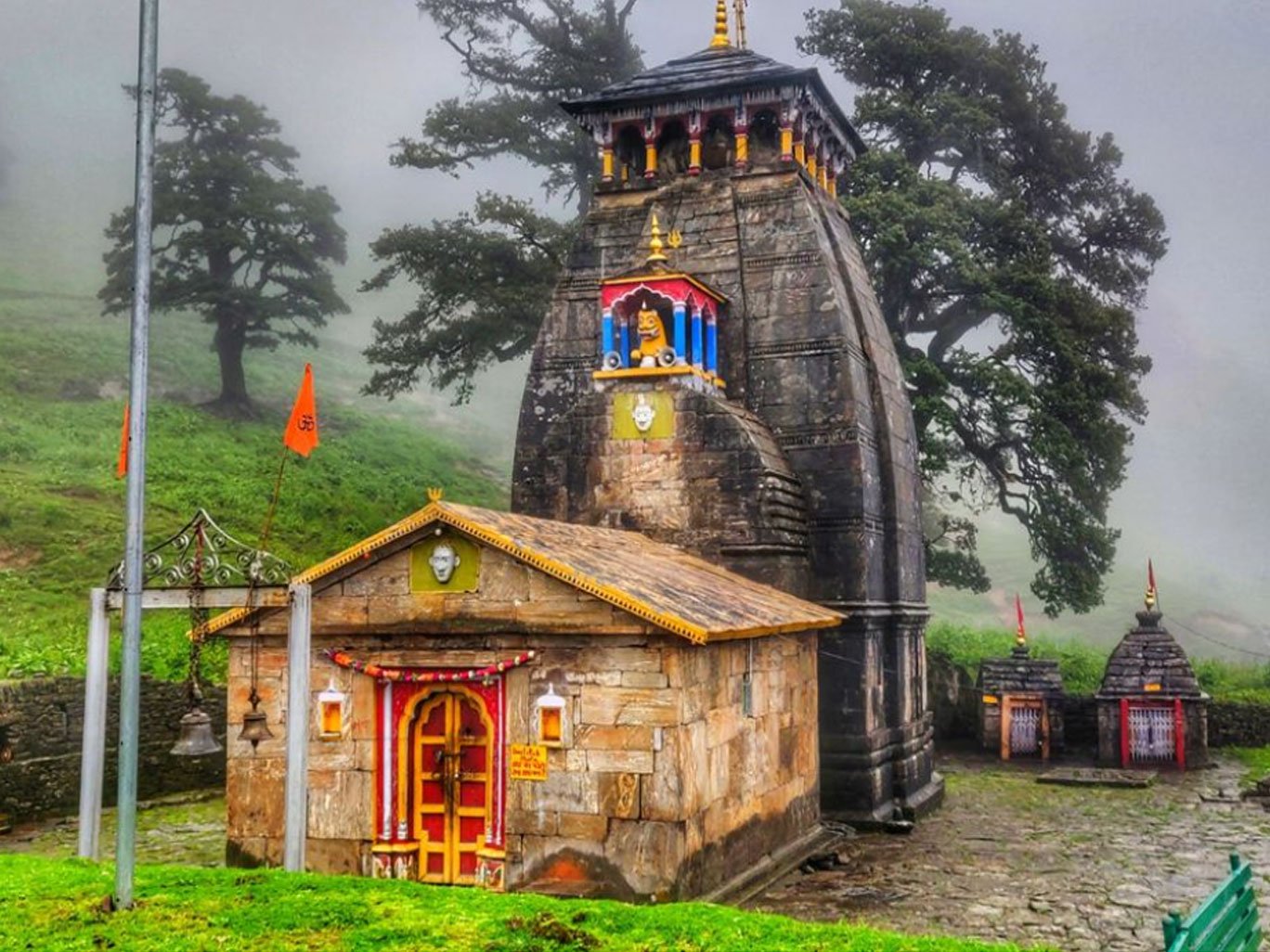
Madhyamaheshwar is a high-altitude pilgrimage destination in Rudraprayag district, Uttarakhand, and Ransi is commonly used as the practical starting point for the present-day trek. Uttarakhand Tourism also identifies Ransi as a base camp and describes the destination as a trekking and pilgrimage site.
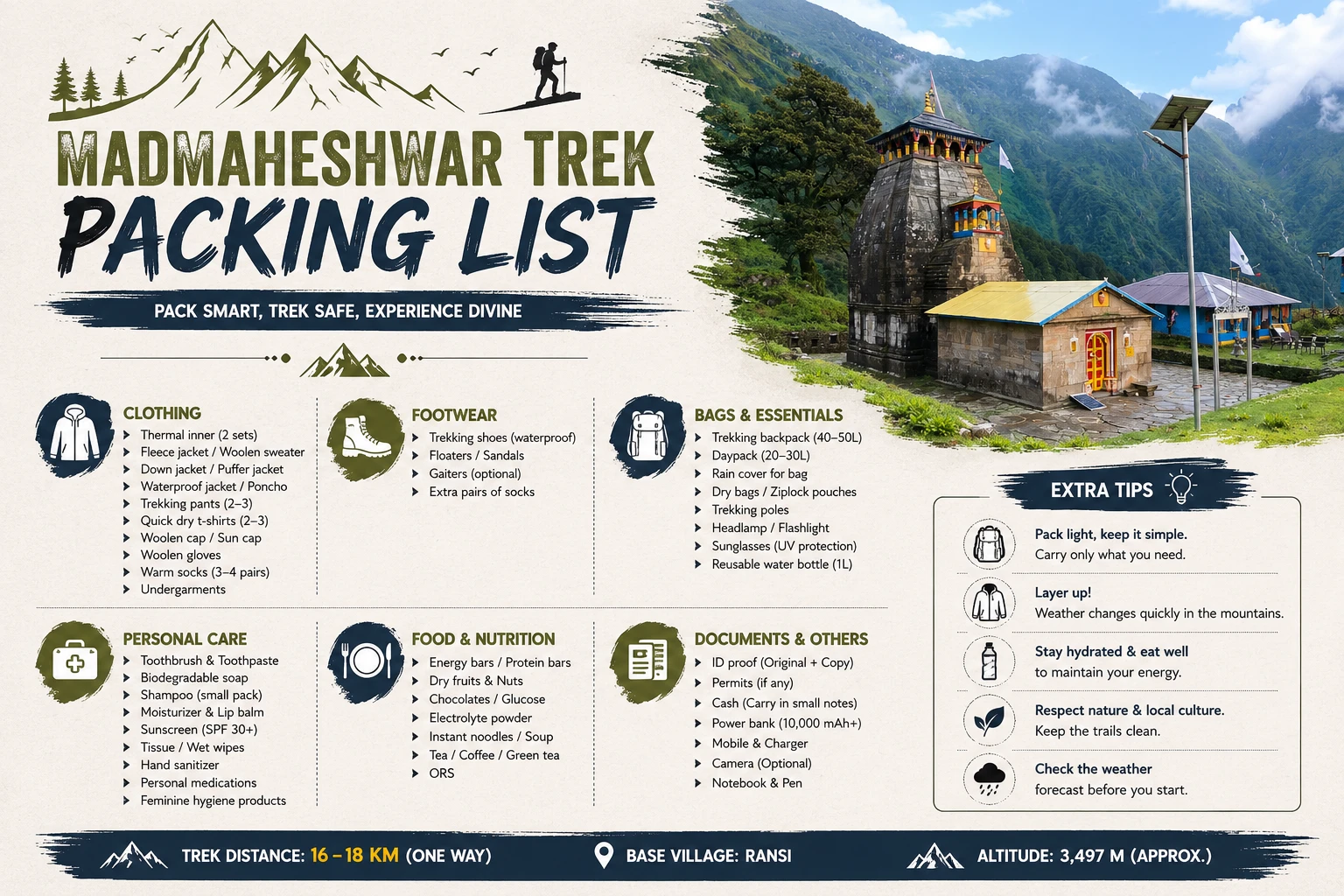
Madhyamaheshwar Trek Packing List at a Glance
Category | Essential Items |
|---|---|
Footwear | Trekking shoes with good grip, comfortable socks and lightweight footwear for rest |
Clothing | Quick-dry base layers, trekking trousers, warm layers and extra clothes |
Rain protection | Waterproof jacket or poncho, backpack rain cover and waterproof storage bags |
Cold protection | Fleece or insulated layer, warm cap, gloves and thermal layers when required |
Personal care | Toothbrush, toothpaste, soap, tissues, hand sanitiser and personal hygiene items |
Health | Personal medicines, basic first-aid supplies and prescribed medication |
Hydration | Reusable water bottle or hydration system |
Food | Energy snacks, dry fruits and other lightweight food for gaps between meals |
Documents | Photo ID, booking details and any required travel or registration documents |
Electronics | Mobile phone, charging cable, power bank and headlamp |
Trek accessories | Sunglasses, sunscreen, trekking poles and a small daypack |
Money | Sufficient cash in small denominations for remote areas |
Footwear for the Madhyamaheshwar Trek
Footwear is one of the most important decisions when preparing for the trek. Choose trekking shoes that provide a secure grip on uneven mountain surfaces and have already been worn on shorter walks before the journey.
Avoid using brand-new shoes for the first time on the trek. Even a well-designed pair can cause blisters if the fit has not been tested.
Carry several pairs of comfortable trekking socks and keep at least one dry pair protected inside your backpack. A lightweight pair of slippers or sandals can also be useful for resting at your accommodation after the day's walk.
The aim is not to carry multiple pairs of heavy footwear. One dependable trekking shoe and one lightweight resting option are generally more practical.
Clothing to Pack
The clothing system should allow you to adjust to changing temperatures rather than relying on one heavy jacket.
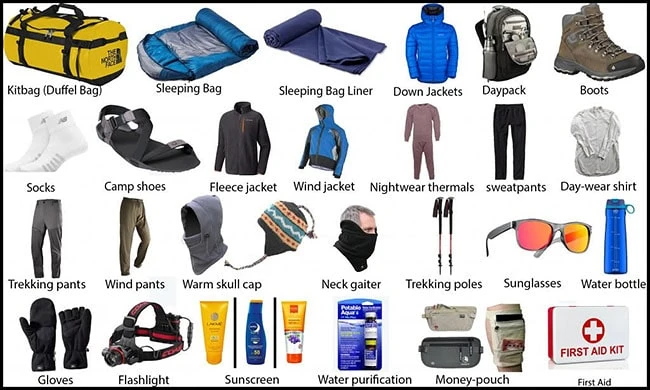
Carry quick-drying trekking trousers, breathable base layers and a warm middle layer. An additional insulated layer becomes more useful as temperatures fall, particularly during colder periods.
A practical clothing setup can include:
Two or more quick-drying trekking tops
Two trekking trousers
Warm base or thermal layers when required
Fleece or insulating mid-layer
Lightweight insulated jacket
Comfortable sleepwear
Warm socks
Warm cap
Gloves
Extra undergarments
Avoid filling the backpack with multiple heavy cotton garments. Cotton can remain damp for longer after rain or perspiration, making it less practical for a multi-day mountain journey.
Rain Protection
Rain protection should remain part of the packing plan even when the forecast looks favourable. Mountain weather can change quickly, and wet clothing or equipment can become a serious inconvenience during a remote trek.
Carry a waterproof jacket or poncho that can be worn while walking. A rain cover for the backpack is equally important.
Use waterproof pouches or dry bags to protect clothes, documents, electronics and other items inside the backpack. Separating important belongings into smaller waterproof compartments also makes it easier to find them without exposing the rest of your luggage to moisture.
For broader seasonal planning, check the Madhyamaheshwar Weather Guide.
Cold-Weather Essentials
Temperatures can feel considerably colder at higher elevations, particularly in the early morning and after sunset. Your exact requirements depend on the travel season and current conditions.
For colder conditions, consider carrying:
Thermal inner layers
Fleece jacket
Insulated outer layer
Warm gloves
Woollen or thermal socks
Warm cap
Neck warmer or buff
Layering is more useful than carrying one extremely heavy jacket because layers can be added or removed as conditions change.
Do not assume that daytime temperatures represent the conditions you will experience throughout the trek. Morning starts, evenings and higher sections can feel substantially colder.
Personal Hygiene Kit
Keep personal-care items compact. There is no advantage in carrying full-size toiletries on a multi-day mountain journey.
A small hygiene kit can contain:
Toothbrush and toothpaste
Small soap or body wash
Hand sanitiser
Tissues
Biodegradable wet wipes where appropriate
Small towel
Lip balm
Sunscreen
Personal hygiene products
Toilet paper or tissues in a waterproof pouch
Carry used tissues and other waste until you reach an appropriate disposal point. Avoid leaving packaging, plastic or other waste along the trail.
First-Aid and Personal Medicines
Carry the medicines you normally require rather than depending on local availability.
Your personal medical kit can include:
Regular prescription medicines
Basic bandages
Blister protection
Antiseptic supplies
ORS or electrolyte sachets
Basic pain-relief medication that you normally use
Any doctor-recommended medication
Small personal first-aid kit
If you have a medical condition, take the medication and documentation recommended by your healthcare professional.
Do not use the packing list as a substitute for medical advice, particularly when planning a high-altitude trek.
Water and Hydration
Carry a reusable water bottle or suitable hydration system that you can refill where safe and appropriate.
Avoid assuming that every water source along the route is automatically safe to drink. If you are unsure about a source, use an appropriate water-treatment method or obtain drinking water from a reliable local facility.
A practical hydration setup should allow you to carry enough water between reliable refill points without making the backpack unnecessarily heavy.
Food and Trek Snacks
Food availability varies along a remote Himalayan route, so lightweight snacks can provide useful backup between meals.
Suitable options may include:
Dry fruits
Energy bars
Roasted snacks
Biscuits
Chocolate
Glucose or electrolyte products
Other lightweight packaged foods
Choose food that travels well and does not require cooking.
Avoid carrying excessive quantities. The purpose of emergency snacks is to supplement available meals and provide backup during delays rather than replacing the food arrangements throughout the journey.
Documents and Money
Keep important documents protected from rain and easily accessible.
Carry:
Valid photo identification
Accommodation or transport booking details
Any applicable registration confirmation
Emergency contact information
Copies of important documents where useful
Cash is also important because digital payment and mobile connectivity may not work consistently throughout remote sections.
Keep cash divided between two secure locations rather than storing the entire amount in one wallet or pocket.
Electronics and Power
You do not need to carry a large collection of electronic equipment.
A practical setup includes:
Mobile phone
Charging cable
Power bank
Headlamp
Spare batteries if required by your equipment
A headlamp is particularly useful because it leaves both hands free and is more practical than relying on your phone's flashlight.
Download important travel information before leaving areas with reliable connectivity. Do not depend entirely on mobile data for navigation or communication.
Trekking Accessories
A few small accessories can make the journey more comfortable.
Consider carrying:
Sunglasses
Sunscreen
Lip balm
Trekking poles
Small daypack
Lightweight towel
Reusable water bottle
Headlamp
Backpack rain cover
Trekking poles can be particularly useful on uneven or steep sections, but they are optional if you are already comfortable walking without them.
For information about the physical demands of the route, see the Madhyamaheshwar Trek Difficulty Guide.
What to Pack for Different Seasons
May and June
Early-season travel generally requires a combination of breathable trekking clothes and warm layers.
Prioritise:
Trekking shoes
Quick-dry clothes
Warm mid-layer
Light insulated jacket
Gloves and warm cap
Sun protection
Rain protection
Personal medicines
Do not assume that summer conditions at lower elevations will feel the same near the temple.
July and August
Monsoon travel requires considerably more attention to waterproofing and trail conditions. Heavy rain can affect roads and walking surfaces, so your packing should prioritise keeping yourself and your essential belongings dry.
Prioritise:
Waterproof jacket or poncho
Backpack rain cover
Waterproof storage bags
Quick-drying clothes
Extra socks
Shoes with dependable grip
Headlamp
Personal first-aid supplies
Leech and insect precautions appropriate to local conditions
Packing correctly does not remove the risks associated with monsoon trekking. Check current conditions before starting and avoid travelling when local authorities advise against it.
September and October
Post-monsoon travel can require a combination of rain protection and colder-weather layers.
Prioritise:
Trekking shoes
Quick-dry clothing
Warm layers
Light insulated jacket
Rain protection
Extra socks
Sun protection
Personal medicines
As the season progresses, prepare for increasingly cold mornings and evenings.
Winter
The main Madhyamaheshwar Temple closes during the winter season, so this packing list should not be interpreted as a recommendation for a normal winter trek to the closed high-altitude shrine.
If you are travelling in the wider region during winter, check seasonal access information before planning the journey.
What Not to Carry
A lighter backpack is generally easier to manage on a multi-day mountain trek.
Avoid carrying:
Excessive clothing
Heavy footwear
Large toiletry bottles
Unnecessary electronic devices
Glass containers
Excessive packaged food
Items that can easily leak
Unused camping equipment when accommodation is already arranged
Before leaving, remove anything that you have packed “just in case” but are unlikely to use.
A useful rule is to separate your belongings into three groups: essential, useful and optional. Remove most items from the optional group unless they serve a specific purpose for your season or itinerary.
How to Keep Your Backpack Light
Pack according to the number of trekking days rather than the number of things you own.
Use lightweight clothing that can be layered and dried easily. Keep toiletries in small containers and avoid carrying multiple versions of the same item.
Place frequently needed items such as rain protection, water, snacks and a headlamp where they can be reached without unpacking the entire bag.
Keep clothing and electronics in separate waterproof bags. This organisation also makes it easier to find important items during a rest stop.
If you are using a porter or another local support service, do not use that as a reason to carry unnecessary belongings. A lighter load remains easier to manage and organise.
Madhyamaheshwar Trek Packing Checklist
Before leaving for the trek, check the following:
Clothing
Trekking trousers
Quick-dry tops
Warm layers
Insulated jacket
Thermal layers when required
Socks
Gloves
Warm cap
Comfortable sleepwear
Weather Protection
Waterproof jacket or poncho
Backpack rain cover
Waterproof storage bags
Extra socks
Footwear
Broken-in trekking shoes
Lightweight footwear for rest
Comfortable trekking socks
Health and Hygiene
Personal medicines
Basic first-aid kit
Blister protection
Sunscreen
Lip balm
Hand sanitiser
Personal hygiene products
Tissues
Food and Water
Reusable water bottle
Water-treatment option where appropriate
Energy snacks
Dry fruits
Electrolyte or ORS sachets
Documents and Money
Photo ID
Booking confirmations
Required registration documents
Emergency contacts
Sufficient cash
Electronics
Mobile phone
Charging cable
Power bank
Headlamp
Trek Accessories
Sunglasses
Trekking poles if required
Small daypack
Lightweight towel
Final Packing Check Before Leaving Ransi
Before beginning the walking section, check that your rain protection is accessible, your footwear is properly secured and your water supply is adequate for the next section of the journey.
Keep essential medicines, identification, cash, phone, headlamp and emergency items where they can be accessed quickly.
Do not leave important belongings buried at the bottom of the backpack. The best packing system is one that allows you to reach the item you need without unpacking everything.
The Madhyamaheshwar Trek Route Guide can be used separately for route planning; this article should remain focused on what you need to carry rather than repeating the trail description.
Frequently Asked Questions
1. What are the most important things to carry for the Madhyamaheshwar Trek?
The most important items are reliable trekking shoes, suitable clothing layers, rain protection, personal medicines, water, food snacks, identification, cash, a phone, power bank and headlamp.
2. Do I need a raincoat for the Madhyamaheshwar Trek?
Yes. Rain protection is a practical part of the packing list because mountain weather can change quickly. A waterproof jacket or poncho and backpack rain cover are useful even outside the main monsoon period.
3. Should I carry thermal clothes for Madhyamaheshwar?
Thermal layers can be useful during colder periods, particularly for early mornings and nights. The exact requirement depends on the season and current weather conditions.
4. Are trekking shoes necessary for Madhyamaheshwar?
Proper trekking shoes with good grip are strongly recommended because the route includes uneven mountain terrain. Wear them before the trip so that you know they fit comfortably.
5. How many clothes should I carry for the trek?
Carry enough quick-drying clothes for your planned trekking days while keeping the backpack light. Layering is generally more practical than carrying several heavy garments.
6. Should I carry cash on the Madhyamaheshwar Trek?
Yes. Carry sufficient cash because card payments, ATMs and digital payment services may not be consistently available in remote areas.
7. Do I need a trekking pole for Madhyamaheshwar?
A trekking pole is optional, but it can provide additional support on steep or uneven sections. Whether you need one depends on your walking experience and personal preference.
8. What food should I pack for the Madhyamaheshwar Trek?
Carry lightweight snacks such as dry fruits, energy bars, biscuits, chocolate or other non-perishable foods. These are useful as backup between meals rather than as a replacement for local food arrangements.
9. Should I carry a backpack rain cover?
Yes. A backpack rain cover is recommended, and important belongings such as documents, clothes and electronics should also be stored in waterproof bags inside the backpack.
10. Is this packing list suitable for a winter Madhyamaheshwar trek?
No. The main Madhyamaheshwar Temple closes during winter, so normal pilgrimage-season packing should not be treated as a recommendation for attempting the high-altitude temple journey during winter closure. Check current seasonal access information before planning.
Final Madhyamaheshwar Trek Packing Checklist
Before starting your journey, make sure you have:
Trekking shoes • Quick-dry clothes • Warm layers • Rain protection • Extra socks • Personal medicines • First-aid supplies • Water bottle • Trek snacks • Photo ID • Cash • Mobile phone • Power bank • Headlamp • Sunglasses • Sunscreen • Personal hygiene items • Waterproof bags • Trekking poles if required
Pack for the conditions you are actually travelling in, keep the backpack organised and avoid unnecessary weight. The right packing approach is not about carrying everything; it is about carrying the items you are most likely to need while keeping essential gear protected and accessible.