Planning a trip to Madmaheshwar requires more than simply choosing a month from the calendar. Weather at this high-altitude Himalayan destination can influence road access, trekking conditions, visibility, accommodation availability, and even how much time you need to complete the trail.
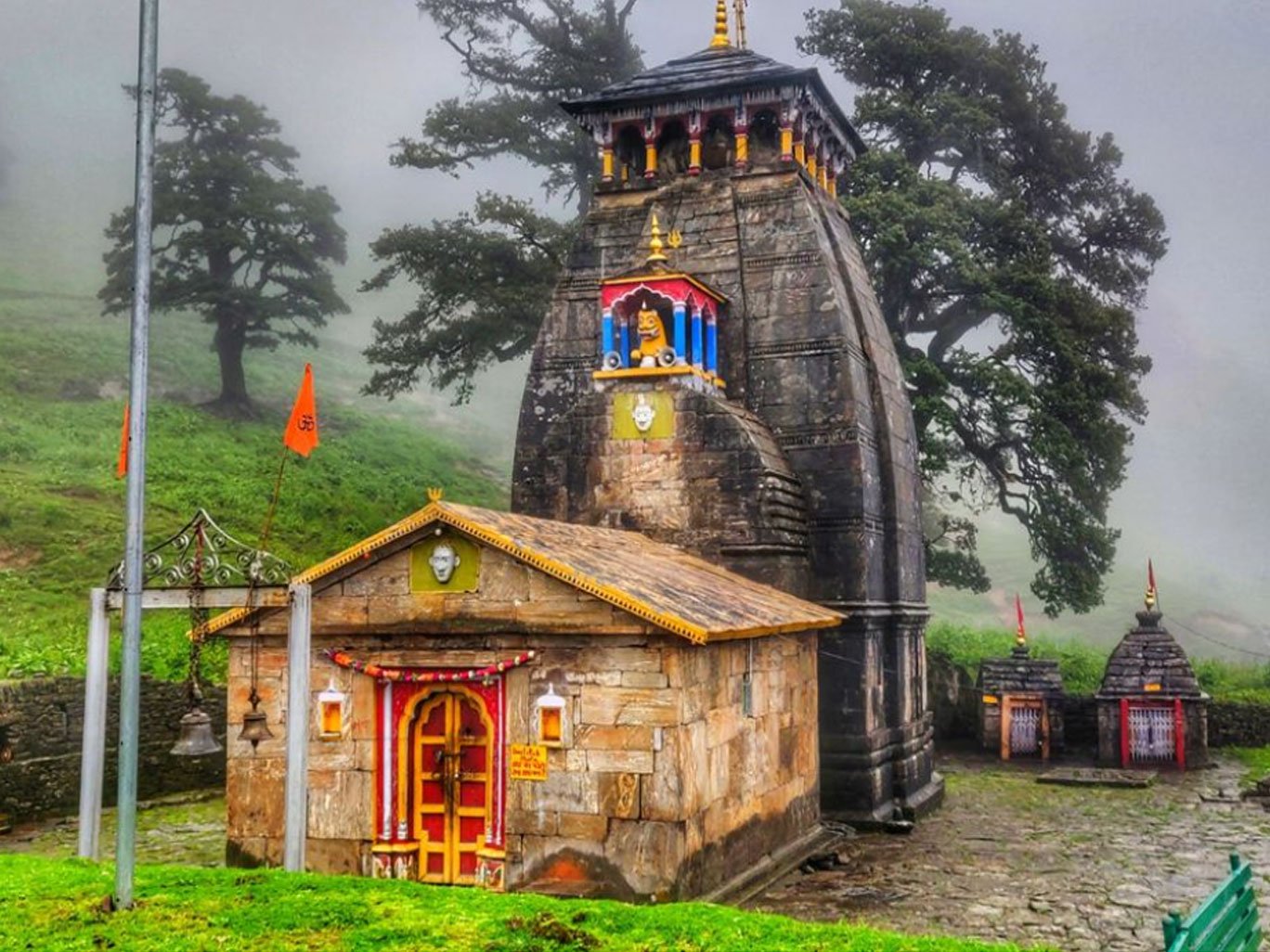
Located in Uttarakhand's Rudraprayag district, Madmaheshwar is one of the Panch Kedar temples and is reached by trekking through the Garhwal Himalayas. The landscape changes dramatically throughout the year, from fresh spring greenery to monsoon-covered forests and crisp post-monsoon mountain views.
This Madmaheshwar weather month-wise guide explains what conditions you can generally expect in each part of the year and what type of traveller each season suits best.
Quick answer: Madmaheshwar has its most practical trekking conditions during the pilgrimage season. For detailed seasonal recommendations, see our guide to the best time to visit Madmaheshwar.
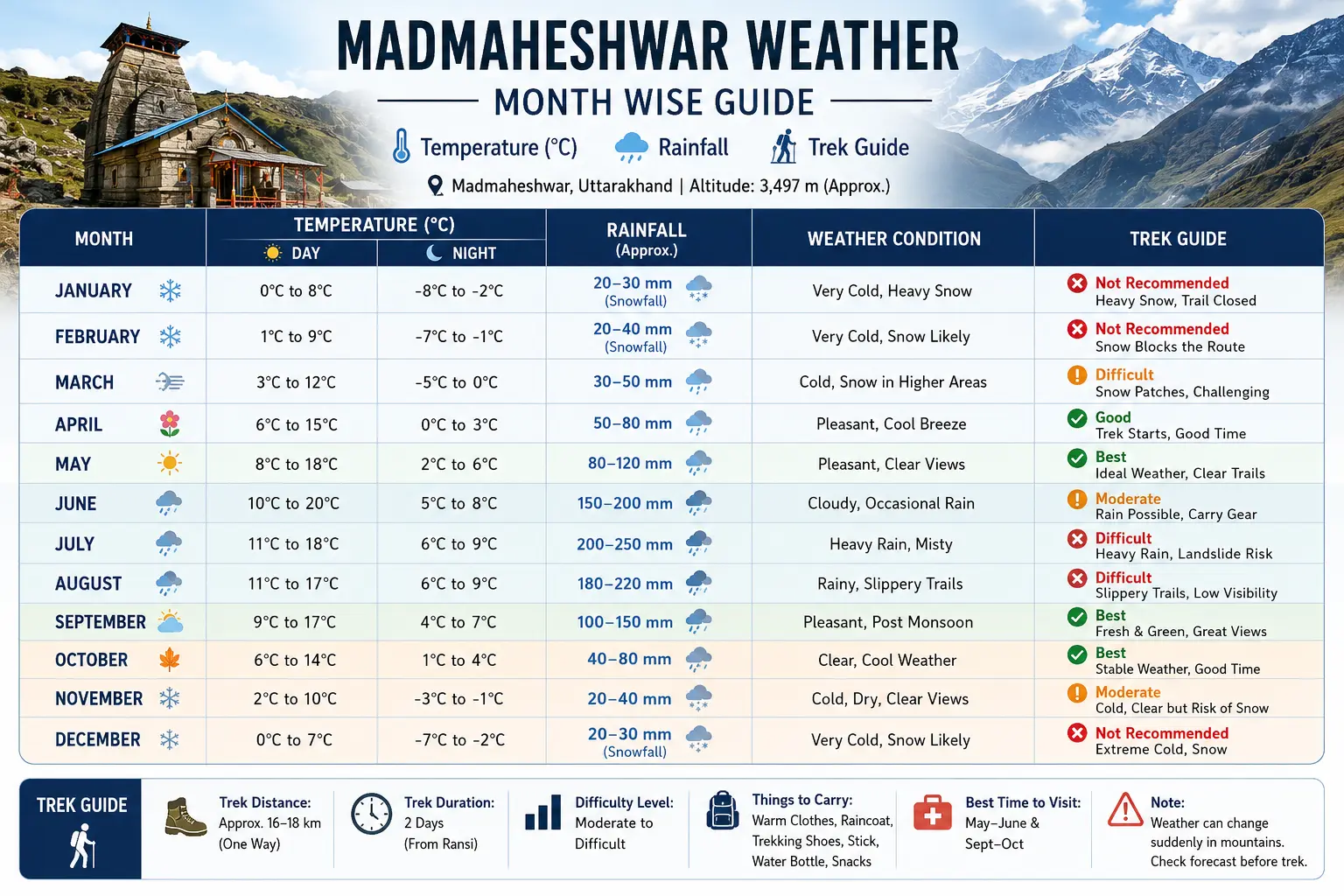
Madmaheshwar Weather at a Glance
Month | Typical Conditions | Trekking Considerations |
|---|---|---|
January | Cold, winter conditions | Main high-altitude shrine closed |
February | Very cold | Winter conditions continue |
March | Cold with gradual seasonal change | Limited suitability |
April | Spring transition | Conditions improving at lower levels |
May | Pleasant days, cold nights | Good trekking conditions |
June | Greener landscape, warmer days | Generally favourable before stronger monsoon influence |
July | Wet and humid | Slippery trails and travel disruption possible |
August | Rainy and cloudy | Less predictable trekking conditions |
September | Post-monsoon greenery | Improving visibility and trail conditions |
October | Cool and relatively clear | Excellent for mountain views |
November | Increasingly cold | Seasonal closure becomes relevant |
December | Winter conditions | Main shrine closed |
These are seasonal planning guidelines rather than guaranteed daily weather conditions. Himalayan weather can change quickly, so the forecast should always be checked shortly before departure.
Madmaheshwar Weather in January and February
January and February fall within the harsh winter period in the higher reaches of Uttarakhand.
Snow and freezing temperatures can make high-altitude travel difficult, while the main Madmaheshwar shrine remains closed during the winter season. The deity is traditionally moved to Ukhimath for worship during this period.
Therefore, these months are not suitable if your primary objective is to trek to the main temple for darshan.
Travellers interested in the winter religious tradition can instead learn more about the Omkareshwar Temple in Ukhimath before planning a winter pilgrimage.
Madmaheshwar Weather in March and April
March marks the gradual transition away from winter, but conditions at higher elevations can remain cold.
By April, lower sections of the route generally begin experiencing more noticeable spring conditions. However, mountain weather should not be compared with plains weather—the temperature can remain considerably colder around exposed and elevated sections.
If you are planning an early-season trek, allow room for changing conditions rather than assuming that spring at lower elevations means warm conditions throughout the route.
April is better viewed as a transition month than as a guaranteed trekking window.
Madmaheshwar Weather in May
May marks the beginning of the more active pilgrimage and trekking period.
Daytime conditions become considerably more comfortable than during winter, while the surrounding landscape starts developing its characteristic Himalayan greenery. Nights and early mornings can still feel cold, particularly at higher elevations.
What to expect in May
Comfortable daytime trekking in generally favourable conditions
Cold mornings and evenings
Fresh spring vegetation
Better accessibility compared with winter
Active pilgrimage-season atmosphere
If you are visiting Madmaheshwar for the first time, May can offer a good balance between trekking comfort and seasonal scenery.
Before starting, however, check the current road and trail status and pack warm layers even if the lower valleys feel pleasant.
Madmaheshwar Weather in June
June generally brings warmer daytime conditions and increasingly green landscapes.
The first part of the month can be particularly attractive for trekkers who want lush scenery without the full impact of the monsoon. As the month progresses, rainfall chances can increase as monsoon systems begin influencing Uttarakhand.
For this reason, travellers planning a late-June trek should pay closer attention to short-term weather forecasts.
If you are also evaluating the physical demands of the route, read our Madmaheshwar trek difficulty guide before finalising your itinerary.
Madmaheshwar Weather in July
July is dominated by monsoon conditions across much of Uttarakhand.
The trail can become wet and slippery, while cloud cover may reduce visibility of the surrounding Himalayan peaks. Heavy rainfall in the wider region can also affect road journeys even when conditions at the trekking location temporarily appear manageable.
Main concerns in July
Wet trekking surfaces
Increased humidity
Frequent cloud cover
Reduced mountain visibility
Possible road or transport delays
Greater need for flexible travel plans
The landscape can be exceptionally green during this period, but the trade-off is less predictable travel.
For a detailed breakdown of monsoon-specific risks, see our Madmaheshwar trek monsoon guide.
Madmaheshwar Weather in August
August continues the monsoon pattern.
Rainfall can remain frequent, trails may stay damp for extended periods, and cloud cover can make mountain views inconsistent. The biggest issue for travellers is often not continuous rain but unpredictability.
A clear morning does not necessarily mean the rest of the day will remain clear.
If you choose August, keep your schedule flexible and allow additional time for unexpected changes in road or trail conditions.
Madmaheshwar Weather in September
September brings a gradual shift toward post-monsoon conditions.
The landscape can remain intensely green, while periods of clearer weather become more common. This makes September particularly attractive for trekkers and photographers who want a combination of greenery and improving visibility.
Early September can still experience rainfall, so it is important not to treat the entire month as completely dry.
Later in the month, weather conditions may become more stable, although Himalayan weather is never completely predictable.
Madmaheshwar Weather in October
October is characterised by cooler temperatures and generally improved post-monsoon visibility.
For travellers interested in Himalayan photography, this period can be particularly rewarding. Lower humidity and clearer skies can produce sharper views of the surrounding mountain landscape when conditions cooperate.
October highlights
Cooler trekking conditions
Lower humidity
Better chances of clear mountain views
Autumn scenery
Crisp mornings
Colder nights at higher elevations
The main thing to remember is that clearer weather does not mean warm weather. As October progresses, mornings and nights can become noticeably colder.
Madmaheshwar Weather in November
November represents another major seasonal transition.
Temperatures fall further, especially after sunset, and the high-altitude environment becomes increasingly unsuitable for normal pilgrimage travel. The main temple's seasonal winter closure is an important consideration when planning a November visit.
Do not assume that an early-November trip will have the same conditions as an October trek. Check the current temple schedule and local travel advisories before making arrangements.
Madmaheshwar Weather in December
December falls firmly within the winter period.
The high-altitude shrine is closed for the winter season, and cold conditions make the main trekking route unsuitable for a conventional pilgrimage.
If your purpose is specifically to visit the main Madmaheshwar Temple, winter should therefore not be treated as a normal travel season.
How Weather Changes the Madmaheshwar Trek
Weather does not change the physical route itself, but it can significantly change the difficulty and duration of the journey.
For example, the same trail can feel completely different after several days of rain compared with a dry autumn morning.
Rain can affect:
Footing and trail stability
Walking speed
Visibility
River and stream crossings
Road connectivity
Packing requirements
Cold can affect:
Early-morning starts
Overnight comfort
Clothing requirements
Energy levels
Water availability in freezing conditions
This is why checking only the monthly average is not enough when planning a Himalayan trek.
For route-specific planning, see our Madmaheshwar trek distance guide and prepare your itinerary according to the actual conditions expected during your travel dates.
What Weather Conditions Should You Check Before the Trek?
A good seasonal window does not guarantee good weather on your exact travel date.
Before travelling to Madmaheshwar, check:
Rain forecast for the days of your trek
Temperature at the trekking altitude
Weather warnings for Uttarakhand
Road conditions on the approach to the trek
Local trail conditions
Temple opening and closing information
For official weather warnings and forecasts, check the India Meteorological Department rather than relying solely on third-party weather apps.
You can also consult the official Uttarakhand Tourism information for Madmaheshwar for destination and access information. Uttarakhand Tourism identifies Madmaheshwar as a Panch Kedar site and notes the trek-based access to the temple.
What to Pack According to Madmaheshwar Weather
Your packing list should change with the season.
For May and June
Carry:
Light thermal layer
Warm jacket
Rain protection
Trekking shoes with good grip
Sunglasses
Sunscreen
Water bottle
Basic first-aid supplies
For July and August
Prioritise:
Waterproof jacket
Rain cover for backpack
Quick-dry clothing
Waterproof footwear or reliable rain protection
Extra socks
Dry bags for electronics
Trekking poles
For September and October
Pack:
Warm fleece or jacket
Thermal inner layers
Waterproof outer layer
Gloves
Warm cap
Good-grip trekking shoes
Sunglasses and sunscreen
Late-season travellers should give extra attention to warm clothing because temperatures can fall quickly after sunset.
Is Madmaheshwar Weather Suitable for Beginners?
Weather is only one part of trek difficulty, but choosing a more predictable season can make the overall experience considerably easier.
Beginners should avoid adding unnecessary monsoon-related challenges to an already demanding Himalayan trek. A stable weather window allows you to concentrate on pacing, hydration, rest and altitude management rather than constantly adjusting your plans because of rain.
That does not mean the trek becomes easy.
Madmaheshwar remains a high-altitude trek, so adequate preparation and realistic expectations are important regardless of the month.
Final Takeaway
Madmaheshwar experiences distinctly different conditions throughout the year.
May and June bring spring and early-summer landscapes with generally favourable trekking conditions. July and August are influenced strongly by monsoon weather and require greater flexibility. September and October offer a transition toward cooler, clearer post-monsoon conditions. Winter brings severe high-altitude conditions and the seasonal closure of the main shrine.
Instead of asking only “Which month is best?”, consider what you actually need from the trip—comfortable trekking, greenery, clear mountain views, photography, or pilgrimage.
Most importantly, use seasonal information as a planning tool, not a guarantee. Check the latest weather forecast, road status, trail conditions and temple schedule immediately before departure.