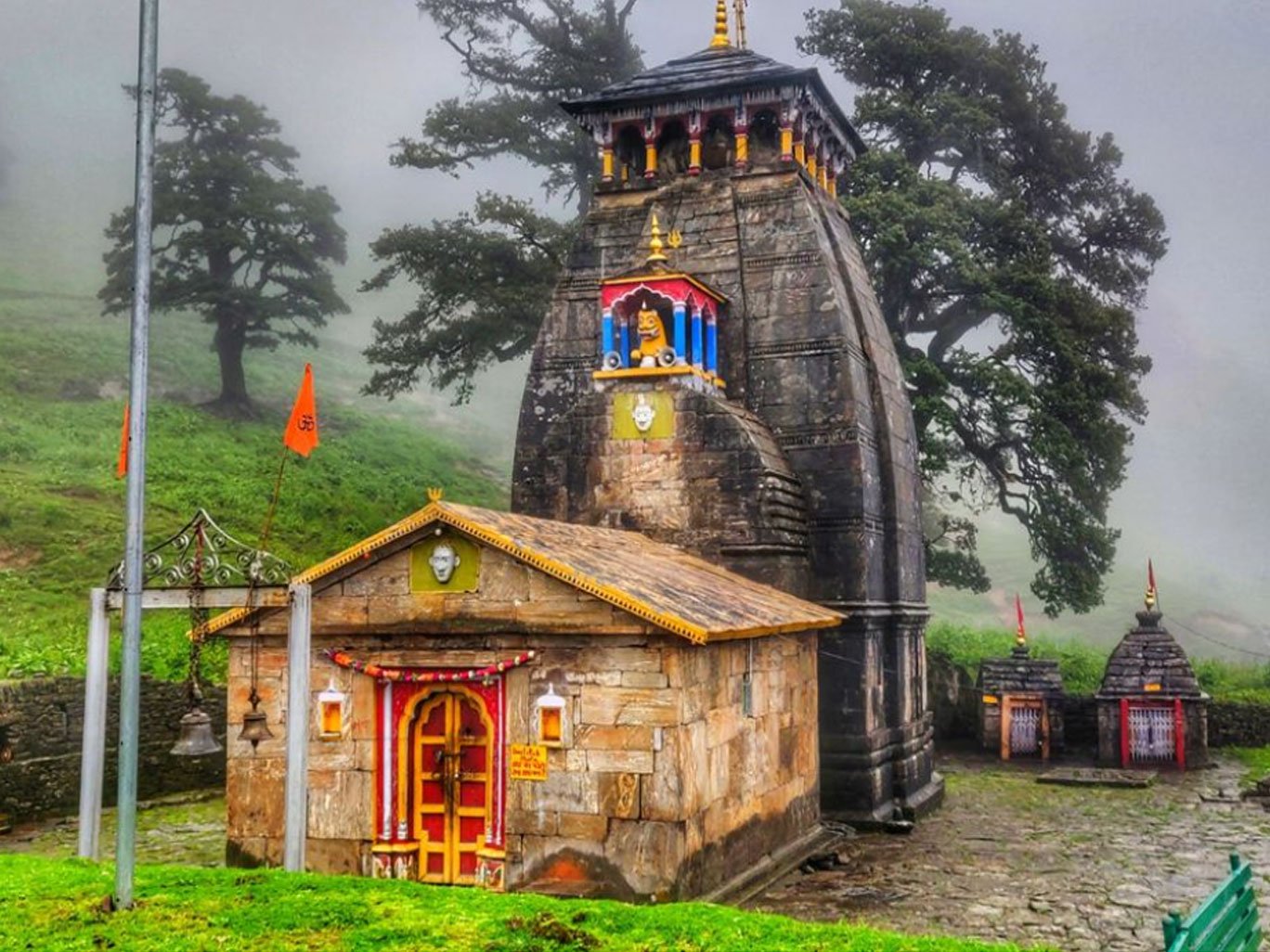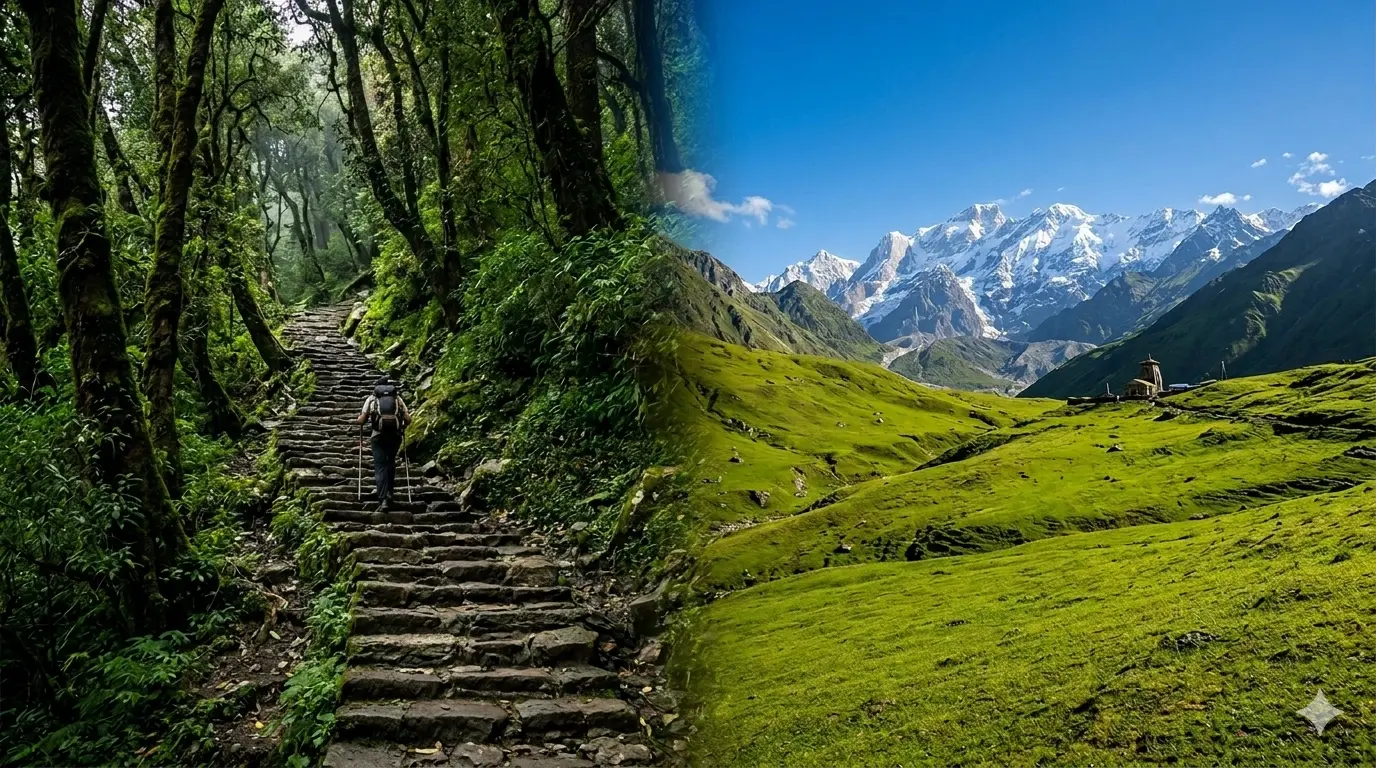
The Madhyamaheshwar Trek is not technically complicated, but that does not make it effortless.
For many travellers, the real challenge is not one dangerous obstacle or one exceptionally difficult section. It is the combination of sustained uphill walking, changing mountain weather, limited facilities, a long day on the trail, altitude, backpack weight and small planning decisions that begin to matter after several hours of trekking.
That is why two people with similar fitness can have completely different experiences on the same Madhyamaheshwar trail. One reaches the temple tired but comfortable; the other is exhausted much earlier than expected.
The difference often comes down to preparation.
This guide focuses specifically on the common Madhyamaheshwar trek mistakes that make the journey unnecessarily harder and, more importantly, how to avoid them.
It does not repeat the complete route, calculate every kilometre, provide a full packing inventory or reproduce a training programme. Those topics have their own dedicated guides. Here, the goal is simpler: identify the decisions that commonly create problems before or during the trek and replace them with better ones.
Madhyamaheshwar Trek Mistakes at a Glance
Common Mistake | Why It Causes Problems | Better Approach |
|---|---|---|
Starting too fast from Ransi | Uses energy before the harder climb | Begin at a controlled pace |
Underestimating the upper climb | Fatigue builds as the gradient increases | Plan effort, not just kilometres |
Arriving unprepared physically | Sustained uphill walking becomes exhausting | Build walking and stair endurance |
Carrying too much | Extra weight compounds fatigue | Pack only what you will actually use |
Ignoring weather and daylight | Conditions can change trail difficulty | Check forecasts and start with time buffer |
Assuming facilities are always available | Food, beds and services are limited | Confirm essentials before moving higher |
Depending on mobile connectivity | Signal can be unreliable | Save key information offline |
Ignoring altitude symptoms | Continuing higher can worsen illness | Stop ascending and respond early |
Treating Budha Madhyamaheshwar as compulsory | Adds effort when you may already be tired | Decide according to fitness and conditions |
1. Starting Too Fast Because the First Section Feels Manageable
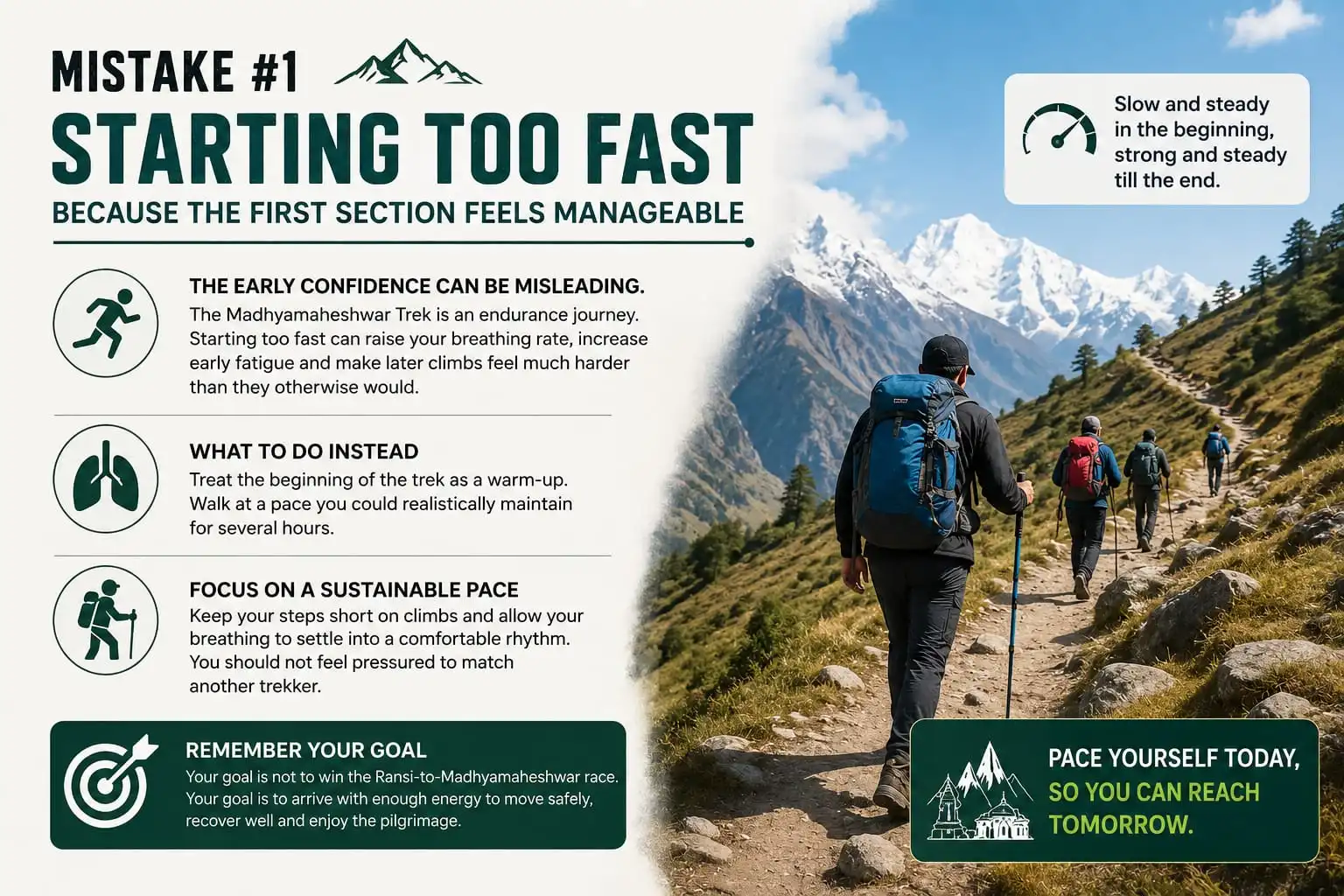
One of the easiest Madhyamaheshwar trek mistakes to make happens in the opening hours.
You leave Ransi feeling fresh. The excitement is high, your legs feel strong, and it is tempting to follow the pace of faster trekkers around you.
That early confidence can be misleading.
The Madhyamaheshwar Trek is an endurance journey. What matters is not how quickly you cover the opening section but how much energy you still have when the route becomes more consistently uphill.
Starting aggressively can raise your breathing rate, increase early fatigue and make later climbs feel much harder than they otherwise would.
What to do instead
Treat the beginning of the trek as a warm-up.
Walk at a pace you could realistically maintain for several hours rather than a pace that feels impressive for twenty minutes. Keep your steps short on climbs and allow your breathing to settle into a comfortable rhythm.
You should not feel pressured to match another trekker.
Someone walking faster may have a lighter backpack, better conditioning, more trekking experience or a completely different itinerary.
Your goal is not to win the Ransi-to-Madhyamaheshwar race. Your goal is to arrive with enough energy to move safely, recover well and enjoy the pilgrimage.
If you are unsure what level of physical effort to expect overall, read the Madhyamaheshwar Trek Difficulty Guide before deciding your pace.
2. Looking Only at Distance and Underestimating the Climb After the Lower Trail
Distance is one of the most misunderstood parts of Himalayan trek planning.
A traveller who can comfortably walk a similar number of kilometres on a flat road may assume the Madhyamaheshwar trail will require roughly the same effort.
It will not.
Mountain kilometres are affected by gradient, trail surface, altitude, weather, accumulated fatigue and the weight you are carrying.
The route through Ransi, Gaundhar and Bantoli also changes character as you move higher. The easier-feeling lower portion should not be used to predict how the rest of the day will feel.
For many trekkers, the sustained climbing beyond the lower valley is where the physical demand becomes much more obvious.
What to do instead
Plan the trek by trail stages and effort, not by distance alone.
Know where the major settlements and transition points are before leaving Ransi. Give yourself realistic time for climbing, short breaks, food, weather changes and slower progress later in the day.
The exact sequence is important enough that it should be understood separately. Use the Madmaheshwar Trek Route Guide to study the Ransi–Gaundhar–Bantoli–Khatara–Nanu–Madhyamaheshwar progression rather than trying to memorise only one total-distance number.
3. Arriving Without Enough Walking and Stair-Climbing Fitness
Madhyamaheshwar is a trekking pilgrimage, not a technical mountaineering expedition.
That distinction sometimes creates the wrong expectation.
You may not need ropes, ice-climbing skills or advanced mountaineering equipment during normal trekking conditions, but you still need enough endurance for hours of walking and sustained uphill effort.
A completely sedentary traveller can struggle even with a relatively light backpack.
The problem is rarely that someone lacks gym-level strength. More often, their legs and cardiovascular system simply are not accustomed to repeating the same uphill movement for a long period.
What to do instead
Prepare for the movement you will actually perform.
Useful preparation includes:
regular brisk walking;
stair climbing;
uphill walking where available;
basic leg-strength work;
practising longer continuous walks;
getting comfortable walking on consecutive days;
testing your footwear before the journey.
You do not need to turn the month before your trip into an extreme fitness challenge.
Consistency matters more.
Someone who gradually builds walking endurance is usually better prepared than someone who does a few exhausting workouts immediately before travelling.
If you need a structured programme rather than general advice, follow the 30-Day Madhyamaheshwar Trek Fitness Plan.
Travellers with significant heart, lung, joint or other medical conditions should discuss strenuous high-altitude travel with an appropriate healthcare professional before the trek.
4. Carrying a Backpack Full of “Just in Case” Items
Overpacking is one of the most avoidable Madhyamaheshwar trek mistakes.
The logic usually sounds reasonable at home:
“What if I need another jacket?”
“What if these shoes get wet?”
“What if I want another outfit?”
“What if I need all these electronics?”
The problem becomes obvious several hours into the climb.
Items that seemed insignificant while packing in a hotel room become noticeable when your shoulders, back and legs are already working continuously.
Heavy jeans, duplicate footwear, oversized toiletry kits, unnecessary electronics and too many clothing changes can add weight without adding meaningful safety or comfort.
What to do instead
Pack for function rather than variety.
Every item should ideally serve one of these purposes:
walking safely;
staying warm;
staying dry;
hydration and energy;
basic health and first aid;
navigation or communication;
essential personal use.
Prioritise reliable trekking footwear, sensible layers, rain protection, essential medicines, a headlamp, water, basic food or snacks and necessary electronics.
Do not use an arbitrary backpack-weight number as a universal rule. A suitable load depends on the traveller, equipment and whether porter support is being used.
The better principle is simple: carry the lightest practical load that still covers your genuine needs.
For a detailed item-by-item breakdown, use the Madhyamaheshwar Trek Packing List instead of turning this mistakes guide into a second packing article.
5. Checking the Season but Ignoring the Actual Weather
Choosing a generally suitable month is useful, but it does not tell you exactly what conditions will be like on the day you trek.
This distinction matters in the Garhwal Himalayas.
Rain can make stone and soil slippery. Cloud can reduce visibility. A colder-than-expected evening can become uncomfortable if warm layers are buried deep inside your bag. Road conditions can also affect the journey before you even reach the walking trail.
Another common problem is starting late because the morning weather looks good.
Mountain conditions can change during the day, and a late start leaves less margin for slow walking, unexpected stops or a change in weather.
What to do instead
Check the current forecast shortly before travelling and again before beginning major trekking stages.
For official forecasts and weather warnings, refer to the India Meteorological Department.
Also ask locally about current trail and road conditions. A forecast cannot tell you everything about a specific path, stream crossing, temporary diversion or recent damage.
Carry rain protection even when persistent rain is not expected, and keep an appropriate warm layer accessible rather than buried at the bottom of your backpack.
Most importantly, preserve daylight.
You do not need one universal departure time for every month. Sunrise, weather, route stage and your walking pace all matter. Start early enough to give yourself a realistic safety buffer instead of chasing an arbitrary clock time copied from someone else's itinerary.
6. Assuming Food, Water and Accommodation Will Appear Exactly When Needed
Madhyamaheshwar is not a conventional resort destination.
Facilities along the route are simpler and more limited, particularly as you move away from larger road-connected settlements.
A traveller accustomed to popular tourist trails may assume that food, rooms, charging points or supplies will be available whenever they decide to stop.
That assumption can create unnecessary stress.
Seasonal demand, weather, local operations and pilgrimage traffic can all affect what is available on a particular day.
What to do instead
Confirm the essentials before committing to your next stage.
Ask:
Where do I realistically expect to stop?
Is accommodation operating there?
Where is my next dependable meal?
Do I have enough drinking water for the upcoming section?
Is my phone charged?
Do I have enough cash?
What is my backup plan if I arrive later than expected?
Do not wait until you are exhausted to begin solving basic logistics.
If travelling during a busier pilgrimage period, confirming your intended night halt in advance can remove a major source of uncertainty.
Carry some emergency snacks and enough water for the section ahead, but avoid turning fear of limited facilities into another reason to overload your backpack.
Good planning sits between those two extremes.
7. Depending on Mobile Signal for Navigation and Important Information
A smartphone is useful on a trek, but it should not be the single point of failure for your journey.
Mobile connectivity can become unreliable as you move deeper into mountain terrain. Battery life also falls quickly when a phone is repeatedly searching for signal, being used for photographs, maps and calls at the same time.
The wrong moment to discover that an important phone number, hotel name or route note exists only inside an app requiring internet access is when you no longer have data.
What to do instead
Before leaving the better-connected part of your journey:
screenshot important booking information;
save local contact numbers;
download any maps you intend to use offline;
keep accommodation names written down;
fully charge your phone;
carry a charged power bank;
tell family that connectivity may be intermittent.
Digital maps can help with orientation, but the physical trail, local instructions and current conditions should take priority.
Mountain routes can be affected by weather, repairs and temporary diversions.
If something on your screen conflicts with clear local guidance or the actual safe path in front of you, do not blindly follow the phone.
8. Treating Headache, Nausea or Dizziness as Something to “Push Through”
Determination is useful on a trek. Ignoring symptoms is not.
As you move to higher elevation, altitude illness becomes a genuine consideration. Headache, nausea, dizziness, unusual fatigue or loss of appetite after gaining altitude should not automatically be dismissed as ordinary trekking discomfort.
The dangerous mistake is believing that reaching the destination matters more than how your body is responding.
What to do instead
If symptoms consistent with acute mountain sickness appear, do not continue ascending while symptoms persist.
Rest at the same elevation and monitor how the person is doing. If symptoms worsen while resting, descent to a lower elevation is the safer response.
Severe symptoms such as confusion, loss of coordination, marked breathing difficulty or significant deterioration require urgent action and medical assistance.
The CDC guidance on high-altitude travel and altitude illness provides detailed information on recognising and responding to altitude illness.
Also remember that hydration is important for normal trekking performance, but drinking excessive water does not make someone immune to altitude sickness.
Do not self-diagnose every headache as AMS either. Exhaustion, dehydration and other medical problems can produce overlapping symptoms. When in doubt, prioritise safety and seek professional or local medical assistance.
9. Treating Budha Madhyamaheshwar as a Mandatory Achievement
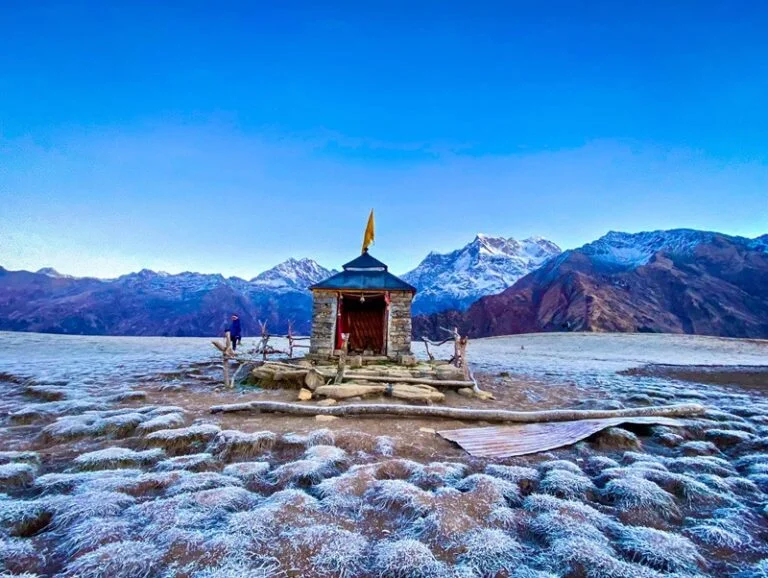
Budha Madhyamaheshwar is one of the most appealing extensions of the journey, and many travellers hope to experience the higher landscape and Himalayan views from the ridge.
But reaching the main Madhyamaheshwar Temple does not create an obligation to continue higher.
This is where “must-do” travel advice can become counterproductive.
You may arrive tired. The weather may be poor. The ridge may be wet or visibility may be limited. Someone in your group may not have recovered adequately from the previous day's climb.
None of those conditions becomes less important simply because a photograph online convinced you that sunrise at Budha Madhyamaheshwar is compulsory.
What to do instead
Treat Budha Madhyamaheshwar as an optional extension based on conditions.
After reaching the main temple:
Rest.
Assess your energy level.
Check the weather.
Ask locally about the current trail.
Confirm sunrise and daylight timing if planning an early walk.
Carry a headlamp if starting before daylight.
Turn back if conditions are unsuitable.
There is no universal 4:30 AM rule that applies to every date and every traveller.
The better start time is the one appropriate for that day's sunrise, weather, trail condition and your group's ability.
Skipping an optional extension because conditions are poor is not a failed trek. It is sensible mountain judgement.
A Better Mindset for the Madhyamaheshwar Trek
Most Madhyamaheshwar trek mistakes begin with one of two assumptions:
“It is only a pilgrimage trail, so it will be easy.”
or:
“If other people can do it quickly, I should be able to do the same.”
Neither is useful.
Madhyamaheshwar does not require you to be an elite athlete, but it does reward realistic preparation.
A better approach is to arrive knowing that:
the lower trail does not represent the entire trek;
uphill endurance matters more than speed;
backpack weight affects your day;
facilities become simpler as you move higher;
weather can alter even a familiar trail;
mobile connectivity should not be taken for granted;
symptoms at altitude deserve attention;
optional extensions should remain optional.
The objective is not to eliminate every inconvenience.
That is impossible in the mountains.
The objective is to avoid turning predictable, manageable challenges into unnecessary problems.
Final Checklist Before Leaving for Madhyamaheshwar
Before beginning the Madhyamaheshwar Trek, make sure you can answer yes to most of the following:
I understand the general route and major trail stages.
I have prepared for sustained walking and uphill effort.
My footwear has already been tested.
I am not carrying obvious unnecessary weight.
I have checked the latest weather information.
I have enough daylight for my intended stage.
My food, water and overnight plan are realistic.
Important phone numbers and booking details are saved offline.
I have cash and a charged power bank.
Someone knows my travel plan.
I understand that I should not continue ascending with worsening altitude-illness symptoms.
I am willing to change my plan if weather, fatigue or trail conditions require it.
That final point may be the most important.
A good Himalayan itinerary is not rigid. It gives you enough structure to stay organised and enough flexibility to respond intelligently when conditions change.
Frequently Asked Questions About Madhyamaheshwar Trek Mistakes
1. What is the biggest mistake beginners make on the Madhyamaheshwar Trek?
Starting with unrealistic expectations is one of the biggest mistakes. Beginners often focus on total distance and underestimate sustained uphill walking, changing terrain and accumulated fatigue. A steady pace and basic pre-trek conditioning make a significant difference.
2. Should I walk fast on the easier section from Ransi?
No. Use the lower section to establish a sustainable rhythm. Walking too quickly while you are fresh can waste energy that becomes much more valuable during the longer uphill portions later in the trek.
3. How much should my backpack weigh for Madhyamaheshwar?
There is no single ideal backpack weight for every traveller. Your own body weight, fitness, equipment and use of porter support all matter. The practical goal is to remove unnecessary items while still carrying essential clothing, weather protection, water, food, medicines and safety equipment.
4. Is the Madhyamaheshwar Trek safe in rain?
Rain can make the trek significantly more difficult because stone, soil and vegetation may become slippery and visibility can deteriorate. Road access can also be affected during severe weather. Check current IMD forecasts, ask locally about conditions and be prepared to delay or modify the trek rather than forcing the original itinerary.
5. Can I depend on mobile network throughout the Madhyamaheshwar Trek?
You should not plan around continuous connectivity. Save important information offline, keep necessary phone numbers accessible without internet, carry a power bank and tell family members that you may be unreachable during parts of the journey.
6. What should I do if I feel symptoms of altitude sickness?
Do not continue higher while symptoms consistent with altitude illness persist. Rest at the same elevation and monitor the situation. If symptoms worsen, descend and seek medical assistance. Severe symptoms require urgent action. Travellers with medical conditions should discuss high-altitude travel with an appropriate healthcare professional before the trek.
7. Is Budha Madhyamaheshwar compulsory after reaching the main temple?
No. Budha Madhyamaheshwar is an additional uphill extension. Attempt it only if your fitness, weather, trail conditions, daylight and recovery from the main trek are suitable.
8. Do I need professional trekking experience for Madhyamaheshwar?
Technical mountaineering experience is not normally required for the standard pilgrimage trail in normal trekking-season conditions. However, good walking endurance, sensible preparation, appropriate equipment and realistic pacing are important.
Final Thoughts
The Madhyamaheshwar Trek becomes much more manageable when you stop treating preparation as a formality.
You cannot control the gradient, altitude or mountain weather. You can control how fast you start, how much you carry, how well you prepare, when you begin walking, how carefully you plan your stops and whether you are willing to change plans when conditions demand it.
The most successful trek is not necessarily the fastest one.
It is the one where you reach Madhyamaheshwar safely, with enough energy and awareness left to appreciate the temple, the villages, the forests and the Himalayan landscape that brought you there in the first place.
Prepare properly, walk at your own pace, respect local conditions and let the mountain—not somebody else's itinerary—decide how quickly your journey unfolds.