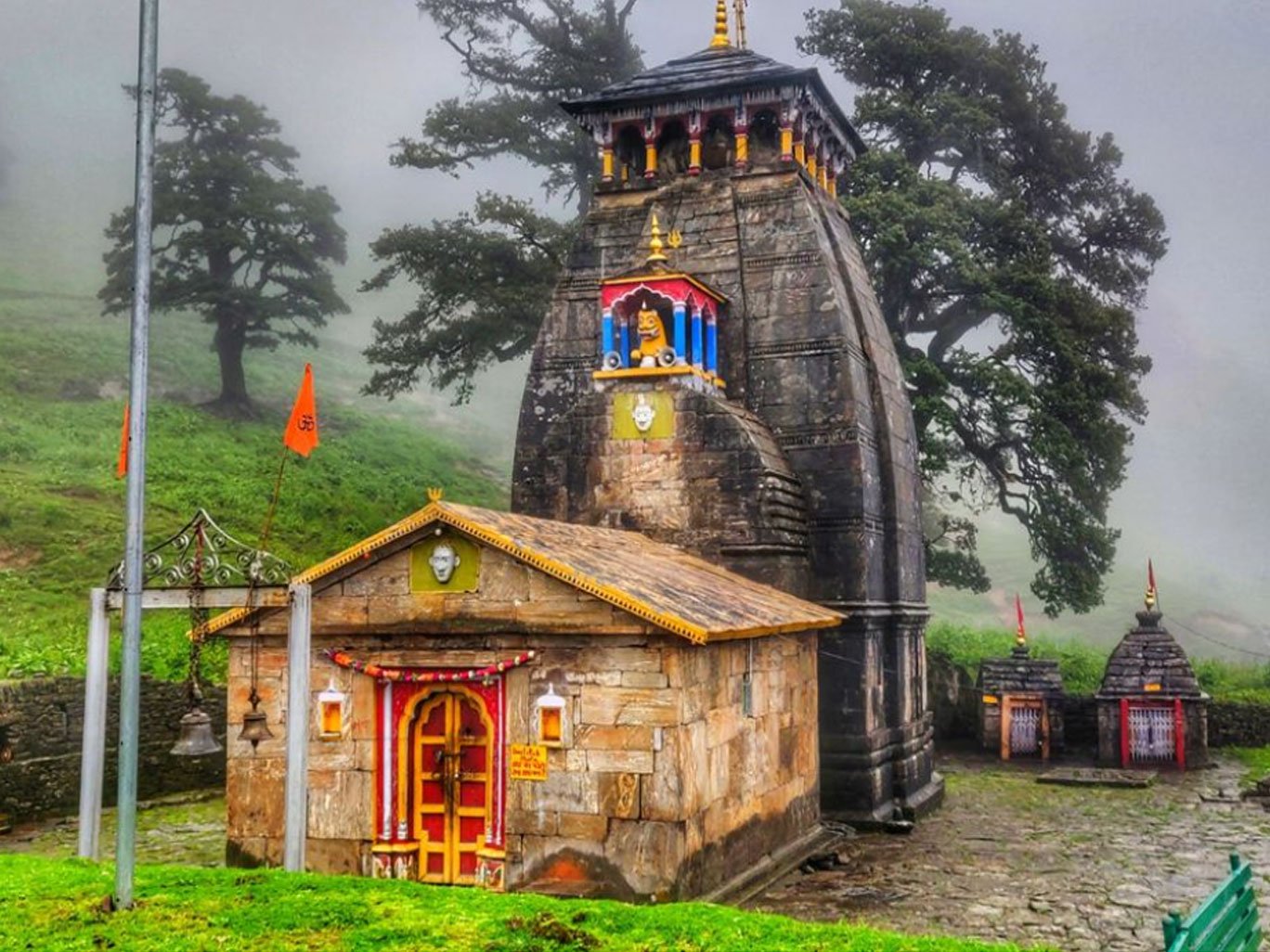
Omkareshwar Temple Ukhimath: The Sacred Winter Abode of Lord Kedarnath
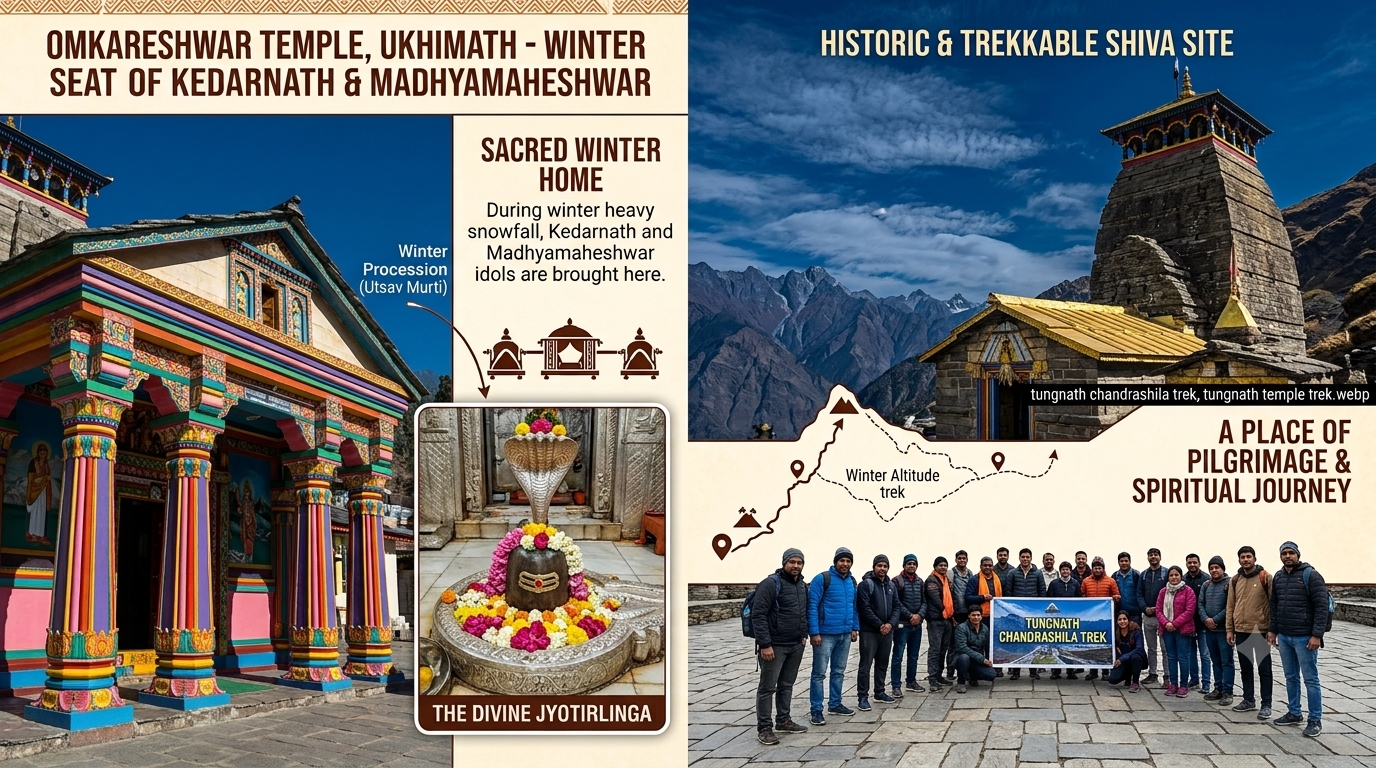
Omkareshwar Temple in Ukhimath is one of the most important winter pilgrimage centres in Rudraprayag district, Uttarakhand. When high-altitude Himalayan shrines become inaccessible during winter, ceremonial worship associated with Kedarnath and Madhyamaheshwar continues in Ukhimath.
The temple therefore has both local religious importance and a direct connection with travellers researching the Panch Kedar pilgrimage.
Spiritual Significance: Why Ukhimath is the Winter Abode
The defining feature of Omkareshwar Temple is its unique role in keeping continuous Himalayan devotion alive throughout the winter:
Home to Two Panch Kedars: Very few places serve as the winter seat for two major shrines simultaneously. Both Lord Kedarnath and Lord Madhyamaheshwar are enshrined and worshipped here from November to April.
Winter Pilgrimage Importance. For devotees unable to visit the high-altitude shrines during their open season, Omkareshwar Temple provides an opportunity to participate in the continuing winter worship traditions in Ukhimath.
Residence of the Rawal: Ukhimath is also the traditional residence of the Rawals (head priests) of Kedarnath, who oversee the daily rituals following age-old traditions.
Mythological Legends & History
Omkareshwar Temple carries deep roots in Hindu mythology and history:
King Mandhata's Penance: Legend states that King Mandhata (an ancestor of Lord Rama) performed intense penance here standing on one leg for 12 years. Pleased by his devotion, Lord Shiva appeared before him in the form of Omkar, giving the shrine its name.
The Wedding of Usha & Aniruddha: Ukhimath was originally known as Ushamath. According to ancient texts, it was the venue for the divine marriage between Princess Usha (daughter of King Banasura) and Prince Aniruddha (grandson of Lord Krishna).
Katyuri-Style Architecture: Built with massive stone walls and intricate woodwork, the temple architecture reflects the ancient Katyuri style, housing idols of Shiva, Parvati, Mandhata, and Usha.
Best Time to Visit Omkareshwar Temple
Season | Months | Experience & Highlights |
Winter | November to April | Most Sacred Period. Witness the winter worship of Lord Kedarnath and Madhyamaheshwar. |
Spring / Summer | May to June | Pleasant weather; ideal base for trekking to Chopta, Tungnath, and Deoria Tal. |
Monsoon | July to August | Exercise Caution. Mountain roads are prone to landslides during heavy rains. |
Travel Guide: How to Reach Ukhimath
Ukhimath is well-connected by road along the scenic Mandakini valley route.
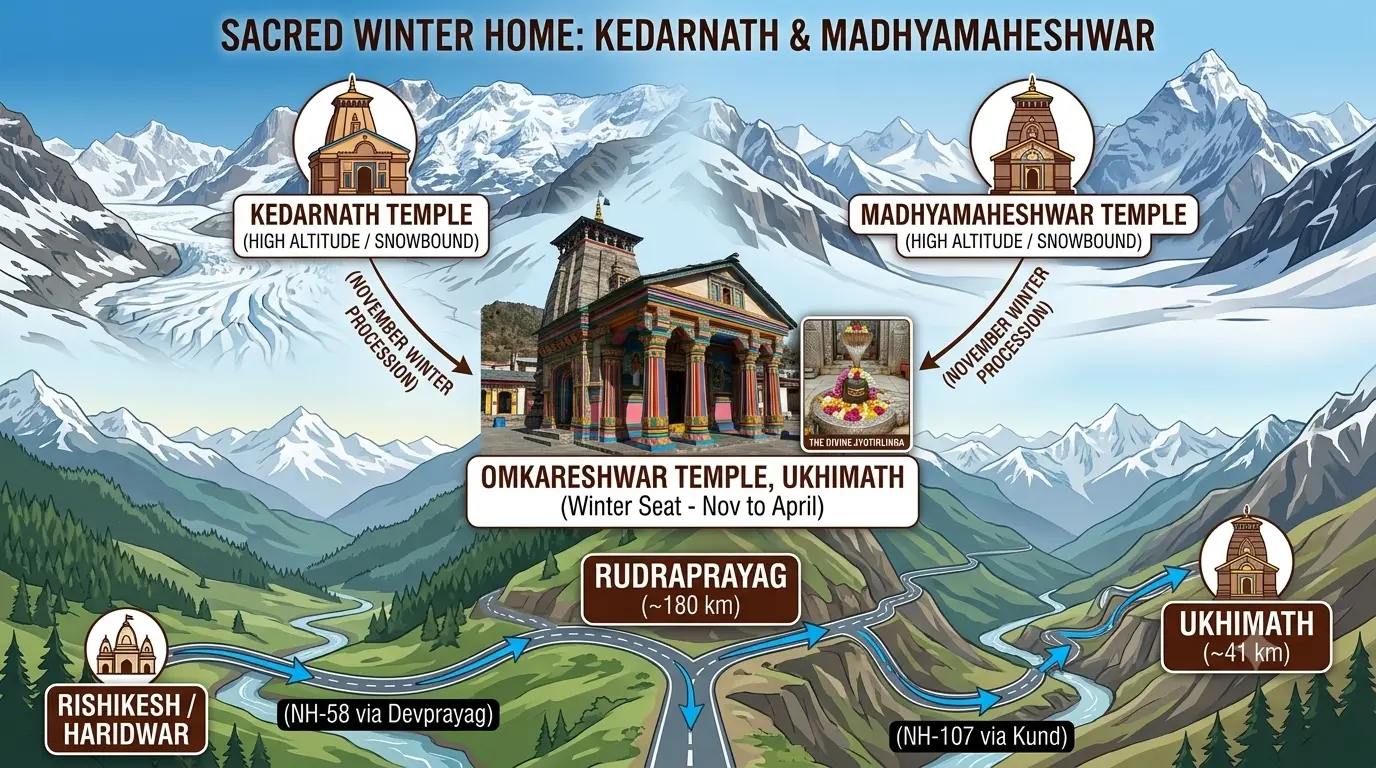
By Road: Ukhimath sits approximately 41 km from Rudraprayag and 180 km from Rishikesh. Regular buses, private cabs, and shared taxis operate along the Rishikesh-Rudraprayag-Ukhimath route.
By Train: The nearest major railway station is in Rishikesh or Haridwar (~180 to 200 km away).
By Air: The closest airport is Jolly Grant Airport in Dehradun, located around 195 km from Ukhimath.
Travel Tips for Pilgrims
Temple Timings: Open daily from 5:00 AM to 12:00 PM and 2:00 PM to 9:00 PM.
Clothing: Heavy woolens are essential if visiting during winter (November to February), as temperatures drop significantly.
Nearby Attractions: Combine your visit with short excursions to Deoria Tal (3 km trek from Sari village) or the scenic meadows of Chopta.
Frequently Asked Questions
Where is Omkareshwar Temple?
Omkareshwar Temple is located in Ukhimath, Rudraprayag district, Uttarakhand. Ukhimath is an important pilgrimage town in the Garhwal Himalayas and serves as a gateway to destinations such as Madhyamaheshwar, Chopta and Tungnath.
Why is Omkareshwar Temple important in winter?
Omkareshwar Temple becomes especially important during winter when high-altitude shrines become inaccessible because of heavy snowfall. During this period, ceremonial worship associated with Kedarnath and Madhyamaheshwar continues in Ukhimath, allowing devotees to participate in the winter pilgrimage traditions.
Is Madhyamaheshwar worshipped in Ukhimath during winter?
Yes. After Madhyamaheshwar Temple closes for the winter season, the ceremonial deity associated with Lord Madhyamaheshwar is brought to Omkareshwar Temple in Ukhimath, where winter worship continues until the high-altitude shrine reopens.
How far is Ukhimath from Rudraprayag?
Ukhimath is approximately 40–45 km by road from Rudraprayag. Travel time can vary depending on road conditions, weather and traffic in the mountain region.
What is the best time to visit Omkareshwar Temple?
Omkareshwar Temple can be visited throughout much of the year, but the best time depends on your purpose. October to April is particularly significant for devotees interested in winter worship traditions, while March to June and September to November generally offer comfortable weather for sightseeing and pilgrimage. During the monsoon season, travellers should check current road and weather conditions before visiting.