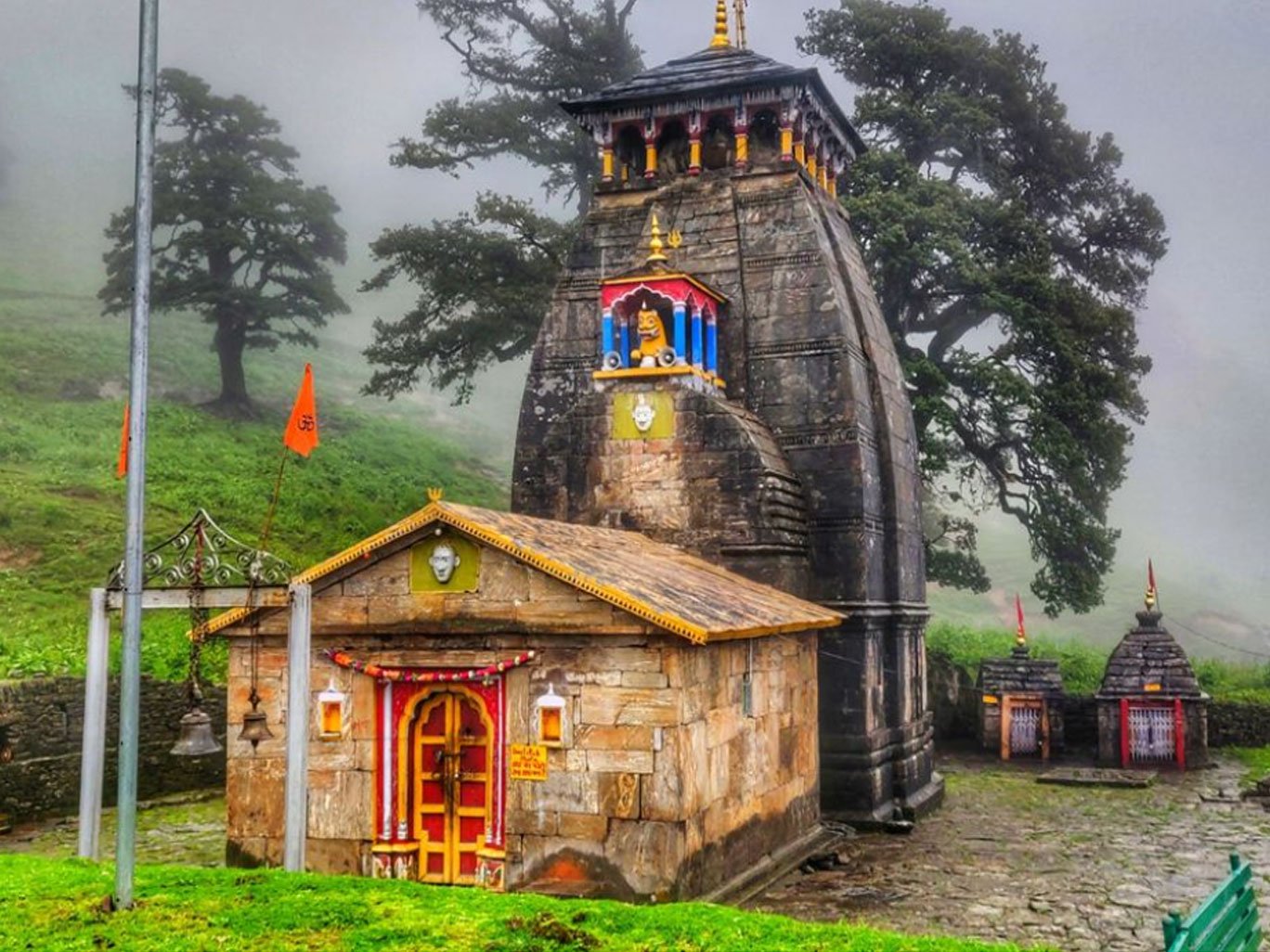
Deep within the Garhwal Himalayas of Uttarakhand lies Panch Kedar—a sacred pilgrimage circuit of five ancient temples dedicated to Lord Shiva. Far removed from urban noise, these holy shrines sit amid alpine bugyals (meadows), dense rhododendron groves, and snow-capped Himalayan ridges.
While the Char Dham Yatra remains the most widely visited circuit in Northern India, the Panch Kedar Yatra is widely considered its most adventurous and spiritually profound counterpart. This comprehensive guide covers the sacred origins, individual temple specifications, trek distances, route order, seasonal schedules, and vital travel tips to help you plan an unforgettable expedition.
The Pandava Legend: Origin of the Panch Kedar
According to Hindu tradition documented in the Mahabharata, after the Kurukshetra War, the Pandava brothers sought absolution for the sin of Gotra Hatya (killing family members and teachers during battle). Guided by Lord Krishna, they journeyed into the Garhwal region to seek the blessings of Lord Shiva.
Reluctant to grant forgiveness easily, Shiva assumed the form of a majestic bull (Nandi) and concealed himself among cattle grazing in the mountains. Bhima recognized the divine bull and attempted to capture it. As the bull sank into the earth to escape, different parts of Lord Shiva's manifestation re-emerged across five distinct locations:
Kedarnath: The hump (Kambh) emerged here.
Madhyamaheshwar: The navel (Nabhi) surfaced in the central valley.
Tungnath: The arms (Bahu) appeared on the high ridge.
Rudranath: The divine face (Mukh) appeared inside a cave.
Kalpeshwar: His matted hair locks (Jata) emerged in the Urgam Valley.
At each site, the Pandavas built stone shrines, establishing the revered Panch Kedar circuit.
Panch Kedar Temples & Opening Schedule Overview
The opening dates of the Panch Kedar shrines are determined annually based on the Hindu Panchang, traditionally announced on the festival of Maha Shivratri.
Temple Name | Manifestation | Altitude | General Opening Time | Tentative Closing Time |
Kedarnath | Hump (Kambh) | 3,583 m (11,755 ft) | Late April / Early May | Bhai Dooj (October/November) |
Tungnath | Arms (Bahu) | 3,680 m (12,073 ft) | Early May | Late October / Early November |
Rudranath | Face (Mukh) | 2,286 m (7,500 ft) | Mid May | Late October |
Madhyamaheshwar | Navel (Nabhi) | 3,497 m (11,473 ft) | Mid May | Mid November |
Kalpeshwar | Hair (Jata) | 2,200 m (7,217 ft) | Open Year-Round | Open Year-Round |
Winter Abodes: When the top four shrines close due to heavy winter snow, the sacred idols (Utsav Dolis) are transferred to their respective winter homes for daily worship: Kedarnath, Tungnath, and Madhyamaheshwar move to Ukhimath (Omkareshwar & Markandeya temples), while Rudranath moves to the Gopinath Temple in Gopeshwar.
Detailed Temple & Trek Breakdown
1. Kedarnath Temple (First Kedar)
Location: Rudraprayag District | Base Camp: Gaurikund (via Sonprayag)
Trek Distance: 16 km (Moderate–Difficult)
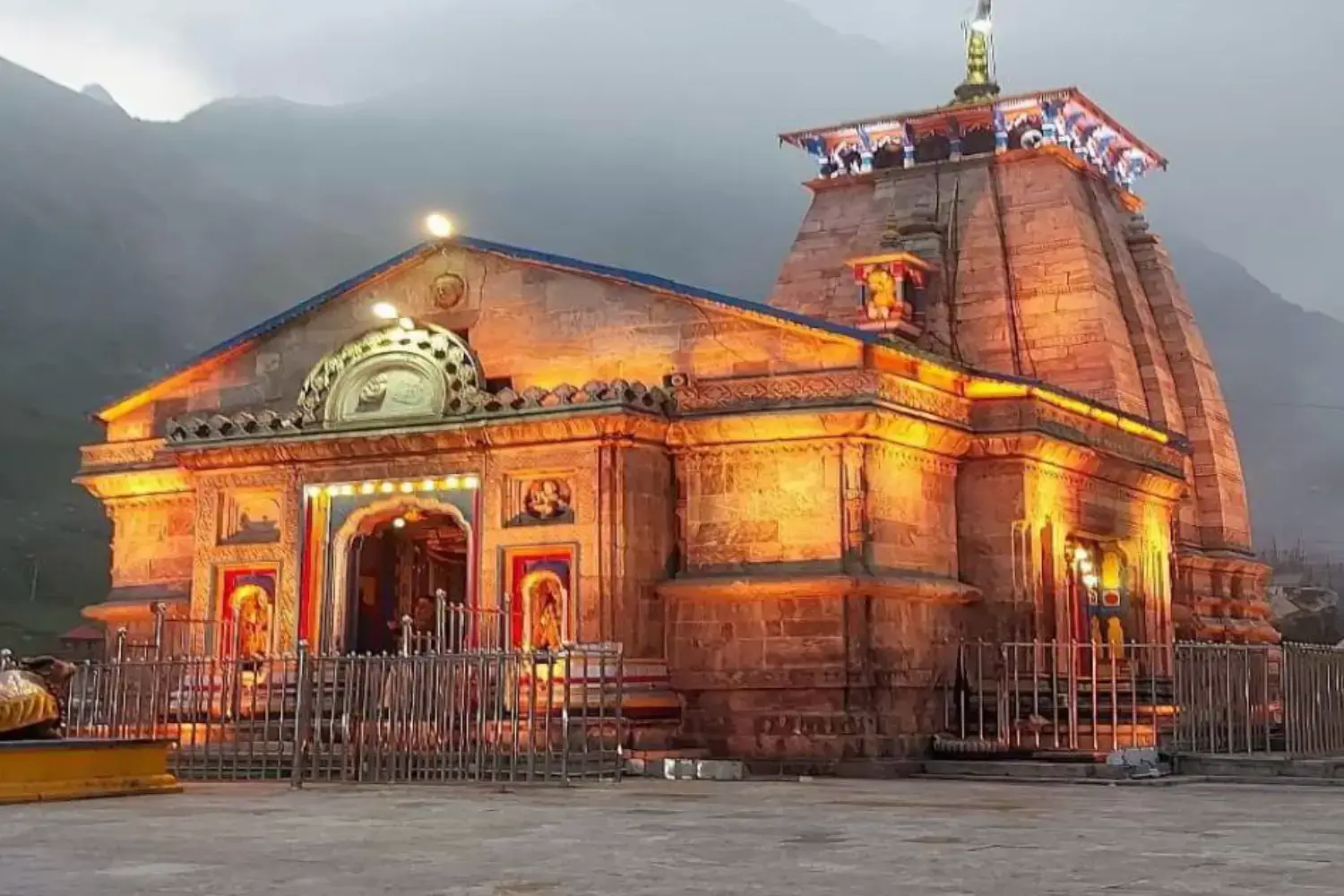
Kedarnath is the primary shrine of the circuit and one of India’s 12 sacred Jyotirlingas. Standing against the Kedarnath Massif along the Mandakini River, the stone structure built by Adi Shankaracharya in the 8th century enshrines the natural rock formation representing Shiva's hump.
2. Tungnath Temple (Third Kedar)
Location: Rudraprayag District | Base Camp: Chopta
Trek Distance: 3.5 km (Easy–Moderate)
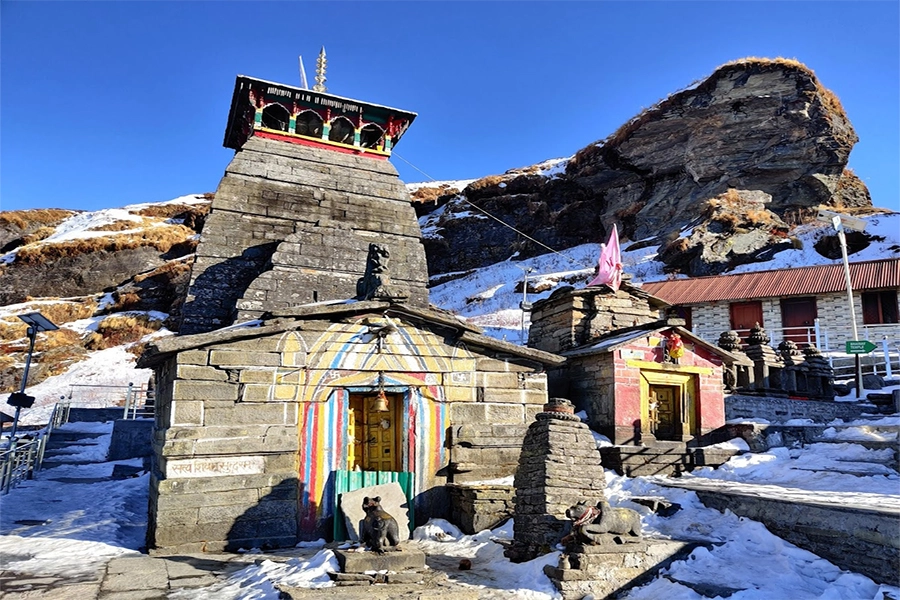
Perched atop a high ridge, Tungnath holds the distinction of being the highest Shiva temple in the world at 3,680 meters. Starting from Chopta (often called the "Mini Switzerland of India"), the paved trail winds through vibrant rhododendron forests. An additional 1.5 km climb leads to Chandrashila Peak (4,130 m), offering 360-degree views of Nanda Devi, Trishul, and Chaukhamba.
3. Rudranath Temple (Fourth Kedar)
Location: Chamoli District | Base Camp: Sagar Village (near Gopeshwar)
Trek Distance: 19 km (Challenging)
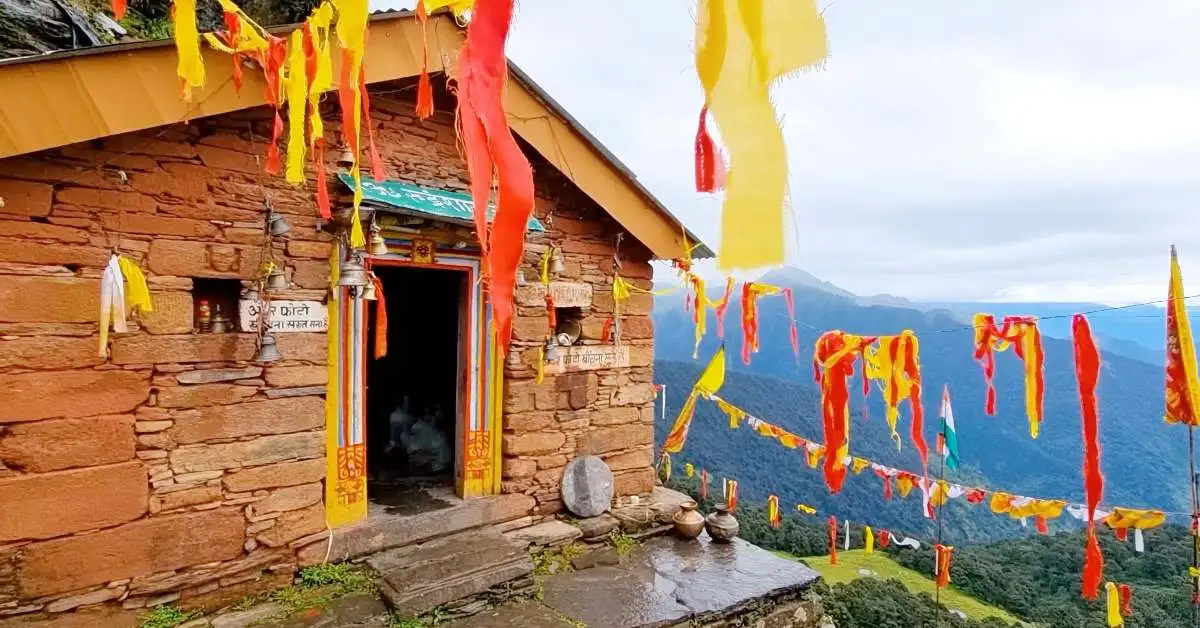
Rudranath is widely considered the most mystical and physically demanding trek of the five. Unlike typical enclosed structures, the face of Lord Shiva (Ekanana) is worshipped inside a natural rock cave without a built dome. The trail traverses steep climbs, dense woods, and expansive high-altitude bugyals like Panar and Lyuti.
4. Madhyamaheshwar Temple (Second Kedar)
Location: Rudraprayag District | Base Camp: Ransi Village
Trek Distance: 16–18 km (Moderate)
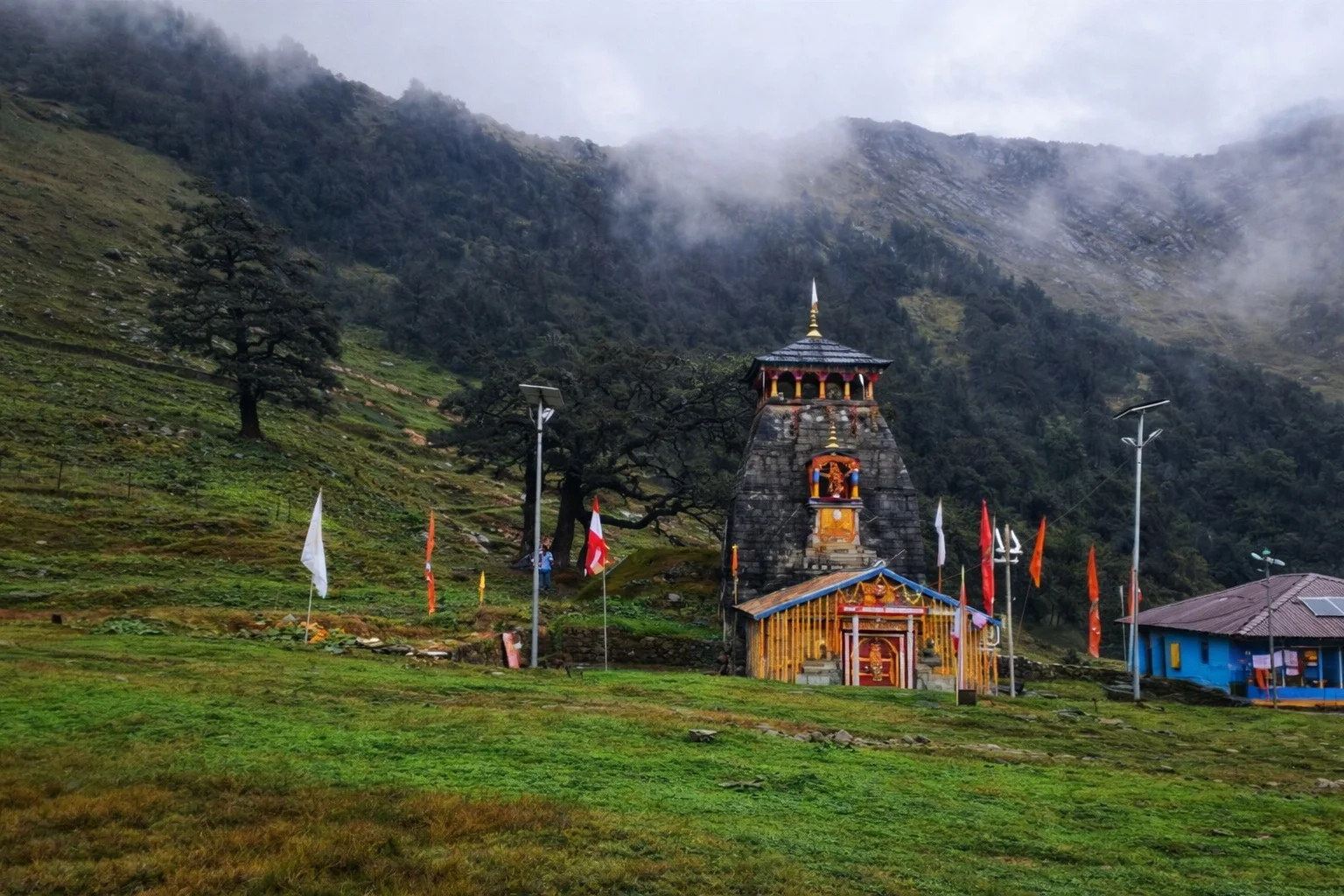
Nestled in a quiet valley with views of Chaukhamba peak, Madhyamaheshwar enshrines the navel (Nabhi) shaped Lingam. The trail starting from Ransi Village passes through traditional Garhwali hamlets, riversides, and mossy forests. A short hike above the main temple leads to Buda Madhyamaheshwar for panoramic mountain reflections.
5. Kalpeshwar Temple (Fifth Kedar)
Location: Chamoli District | Base Camp: Urgam Village (Helang)
Trek Distance: 2 km (Easy)
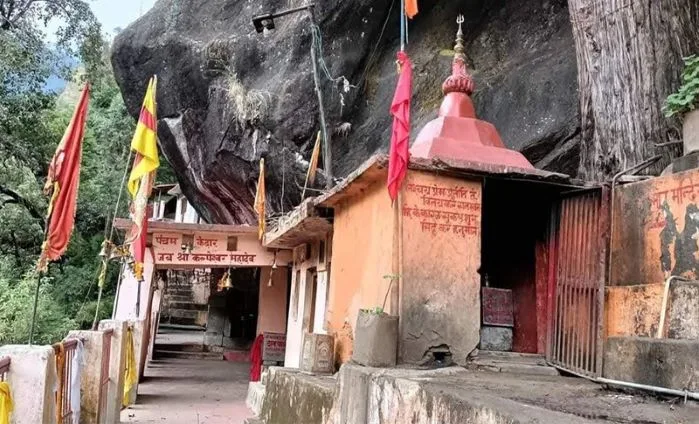
Located in the Urgam Valley, Kalpeshwar is the only temple in the Panch Kedar circuit accessible 365 days a year. Surrounded by apple orchards and pine forests, a short 2 km walk across stone steps and wooden bridges leads to the cave shrine where Shiva's matted hair (Jata) is worshipped.
Recommended & Itinerary
To cover all five shrines logically with minimal backtracking, follow the traditional sequence starting from Rishikesh or Haridwar:
Route Overview:
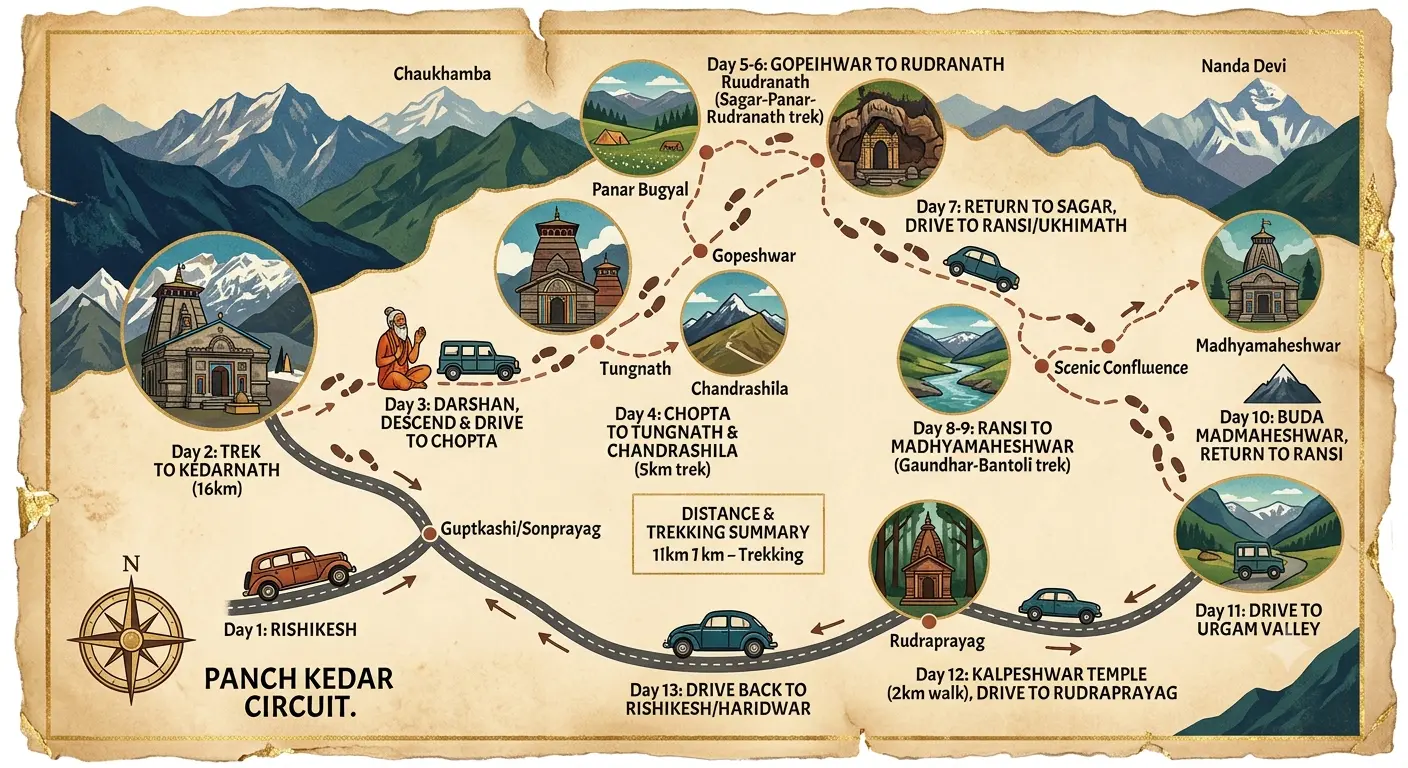
Rishikesh → Sonprayag → Kedarnath → Chopta → Tungnath → Gopeshwar → Rudranath → Ukhimath → Madhyamaheshwar → Helang → Kalpeshwar → Rishikesh
Total Road & Trek Distance: ~1,400 – 1,500 km
Ideal Duration: 14 to 16 Days
Actual Trekking Days: ~8 to 10 Days
Best Season for the Yatra
May to June (Summer): Optimal conditions. Snow clears from high passes, temperatures stay pleasant (12°C to 20°C), and all temples are fully functional.
July to August (Monsoon): Not recommended. Landslides, slick mountain steps, and mudbursts pose safety risks on long trail segments like Rudranath and Madhyamaheshwar.
September to October (Post-Monsoon): Excellent for seasoned trekkers. Offers crisp mountain air, clear sky vistas of Chaukhamba and Nanda Devi, and green alpine slopes.
Winter (Nov to April): Only Kalpeshwar remains accessible; the remaining four temples close due to snowfall.
Essential Travel & Trekking Tips
Physical Conditioning: Start cardio training (walking, stair climbing, running) 4 to 6 weeks before your trip. The long trails to Rudranath and Kedarnath require strong stamina.
Acute Mountain Sickness (AMS): Keep yourself hydrated with water and ORS solutions. Climb at a steady, manageable pace when crossing elevations above 3,000 meters.
Appropriate Gear: Pack sturdy waterproof trekking boots with good ankle support, thermal baselayers, a windproof/waterproof jacket, trekking poles, and a 40–50L backpack with rain cover.
Guide & Permits: A local guide is strongly recommended for the remote Rudranath trail due to limited signage across high bugyals. Register on the official Uttarakhand Char Dham portal before travel.
Responsible Travel: The Panch Kedar circuit crosses delicate alpine ecosystems. Carry reusable water bottles, avoid single-use plastics, and leave no trash along the trails.
Frequently Asked Questions (FAQs) – Panch Kedar Yatra
1. What is the Panch Kedar Yatra?
The Panch Kedar Yatra is a sacred pilgrimage circuit in the Garhwal Himalayas of Uttarakhand, India. It consists of five holy shrines dedicated to Lord Shiva: Kedarnath, Tungnath, Rudranath, Madhyamaheshwar, and Kalpeshwar. Each temple enshrines a distinct physical manifestation of Lord Shiva from the ancient Pandava legend.
2. What is the correct order to visit the Panch Kedar temples?
According to tradition, the Panch Kedar Yatra follows a specific sequence:
Kedarnath (First Kedar - Hump)
Madhyamaheshwar (Second Kedar - Navel)
Tungnath (Third Kedar - Arms)
Rudranath (Fourth Kedar - Face)
Kalpeshwar (Fifth Kedar - Hair/Jata)
However, to optimize modern road connectivity and minimize travel time, many travelers trek in the order of Kedarnath → Tungnath → Rudranath → Madhyamaheshwar → Kalpeshwar.
3. Which is the hardest trek among the Panch Kedar temples?
Rudranath is widely considered the most physically demanding trek in the Panch Kedar circuit. The trail covers approximately 19 km one-way from Sagar Village, involving steep inclines through high-altitude meadows (bugyals), ridge crossings over 3,500 meters, and limited connectivity or infrastructure compared to the other shrines.
4. Which Panch Kedar temple remains open throughout the year?
Kalpeshwar Temple is the only shrine in the Panch Kedar circuit that stays open all 365 days of the year. The remaining four temples (Kedarnath, Tungnath, Rudranath, and Madhyamaheshwar) close during late autumn due to heavy snowfall and reopen in May.
5. Where do the idols stay during the winter season?
When the shrines close for winter, the sacred idols (Utsav Dolis) are moved to their respective winter abodes for daily rituals:
Kedarnath & Madhyamaheshwar: Omkareshwar Temple in Ukhimath
Tungnath: Markandeya Temple in Makkumath / Ukhimath
Rudranath: Gopinath Temple in Gopeshwar
Kalpeshwar: Remains at the primary temple site in Urgam Valley
6. How many days are required to complete the full Panch Kedar Yatra?
A complete Panch Kedar Yatra covering all five temples requires 14 to 16 days from Rishikesh or Haridwar. This accounts for around 100+ km of trekking combined with road travel across the Mandakini, Alaknanda, and Kalpa Ganga river valleys.
7. What is the best time to undertake the Panch Kedar trek?
The ideal windows for the Panch Kedar circuit are:
May to June (Summer): Pleasant weather, clear trekking routes, and colorful alpine flowers.
September to October (Post-Monsoon): Crisp atmospheric clarity, green landscapes, and stunning views of Chaukhamba and Nanda Devi peaks.
Note: Avoid the monsoon season (July to August) due to landslide risks and slippery mountain trails.
8. Is registration mandatory for the Panch Kedar Yatra?
Yes, pilgrims and trekkers must register on the official Uttarakhand Tourism Char Dham portal before starting the journey. Additional local forest entries or permits may be required for specific wildlife sanctuary zones along the Rudranath and Kedarnath routes.