Dhari Devi: The Guardian Goddess of Uttarakhand
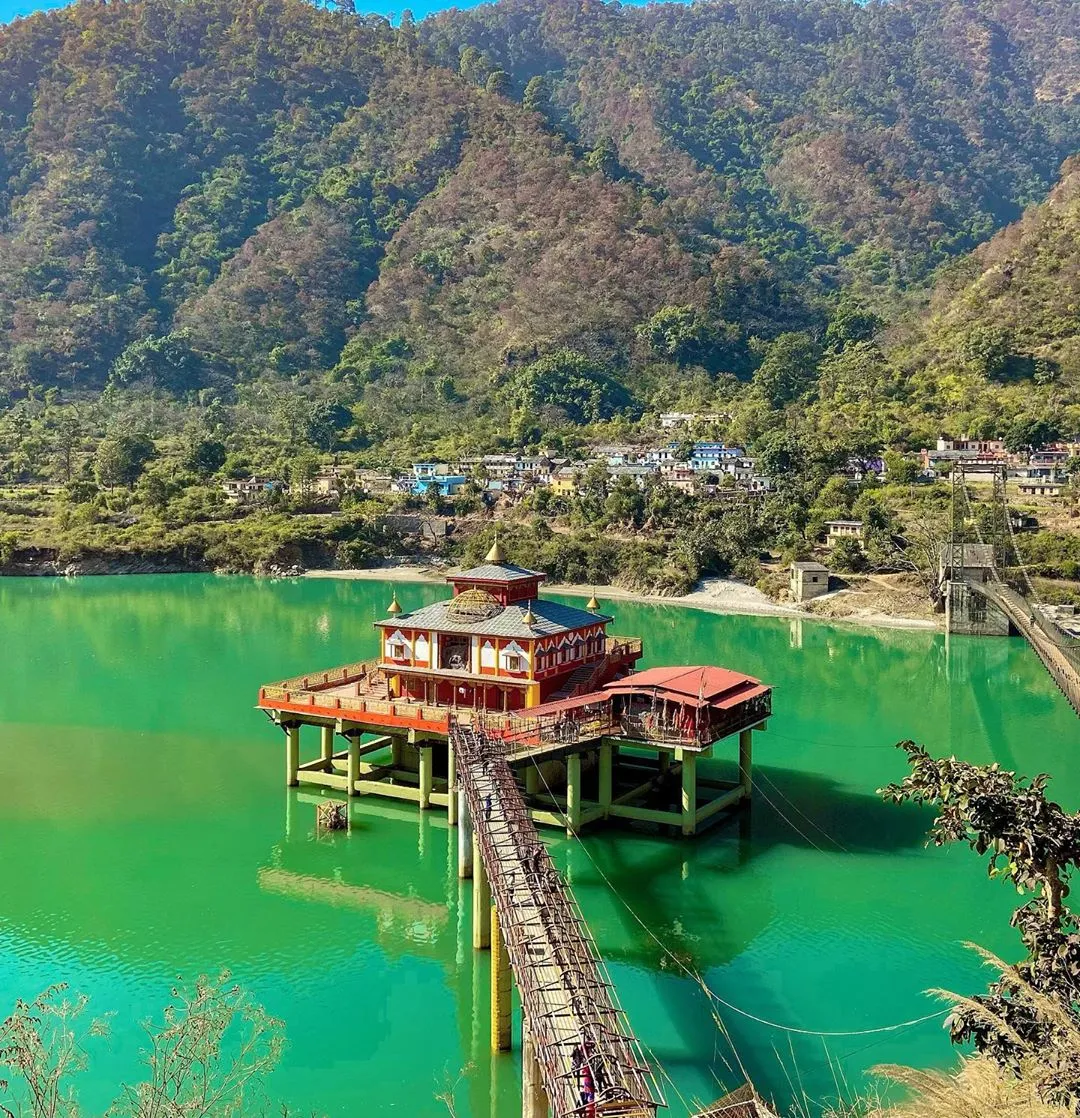
Perched on a raised stone platform amidst the roaring waters of the Alaknanda River, Dhari Devi Temple is one of the most powerful and revered shrines in Uttarakhand. Located between Srinagar Garhwal and Rudraprayag, this sacred open-air temple houses the upper body of Goddess Kali, who is widely worshipped as the protective deity (Kshetrapal) of the entire Garhwal region and the sacred Char Dham Yatra.
According to local beliefs, no pilgrimage to Kedarnath or Badrinath is complete without seeking the blessings of Maa Dhari Devi for a safe and prosperous journey.
Can You Visit Dhari Devi on the Way to Madhyamaheshwar?
Travellers approaching the Madhyamaheshwar region from Rishikesh or Haridwar generally travel through the Srinagar–Rudraprayag corridor. Dhari Devi Temple can therefore be considered as an optional spiritual stop while travelling deeper into Garhwal.
After visiting Dhari Devi, travellers can continue toward Rudraprayag and then the Ukhimath region before reaching Ransi, the main base for the Madhyamaheshwar trek.
For complete trekking information, see our Madhyamaheshwar Trek Route Guide.
Divine Legends & Mysteries of Dhari Devi
The temple is shrouded in deep folklore and ancient mystic beliefs that have drawn devotees from across the globe for centuries.
1. The Idol Changes Form Three Times a Day
One of the most fascinating aspects of Dhari Devi is the belief that the divine stone idol changes appearance as the day progresses:
Morning: Appears as a young, innocent girl (Kanya).
Afternoon: Transforms into a fierce young woman (Yuvati), symbolizing raw power and energy.
Evening: Assumes the form of an elderly matriarch (Vriddha Mata), reflecting wisdom and grace.
2. The Upper Half of Goddess Kali
According to local tradition, only the upper half of Goddess Kali’s idol is enshrined at Dhari Devi. Legend holds that an ancient flood washed the idol downstream until it got stuck against a rock near Kalyasaur village. Villagers heard a divine voice directing them to install the deity on that very rock under the open sky. The lower half of the deity is enshrined at Kalimath Temple in Rudraprayag.
3. The Guardian of the Valley
Locals firmly hold that Dhari Devi must remain under the open sky overlooking the river, guarding the mountains against natural disasters. The deity is believed to protect pilgrims along the winding Himalayan highways.
Spiritual & Architectural Significance
Unlike conventional temples with grand stone towers and closed chambers, the sanctum of Dhari Devi is uniquely positioned.
Open-Air Shrine: The goddess is kept exposed to the open sky, respecting the traditional belief that she desires to stay connected with the natural elements and the sound of the Alaknanda.
Rebuilt Elevation: Following a temporary relocation in 2013 for a hydel project, the shrine was later constructed on an elevated concrete platform right above its original location (mool sthan), surrounded by flowing river currents.
Best Time to Visit Dhari Devi
Season | Months | Weather & Experience |
Spring / Summer | March to June | Ideal weather, pleasant temperatures, and peak time for Char Dham pilgrims. |
Autumn | September to November | Clear mountain views, festive Navratri celebrations, and comfortable travel. |
Monsoon | July to August | River levels rise significantly; travel cautiously due to highway rain conditions. |
Travel Guide: How to Reach Dhari Devi Temple
The temple is located in Kalyasaur in the Pauri Garhwal district along National Highway 7 (NH-7).
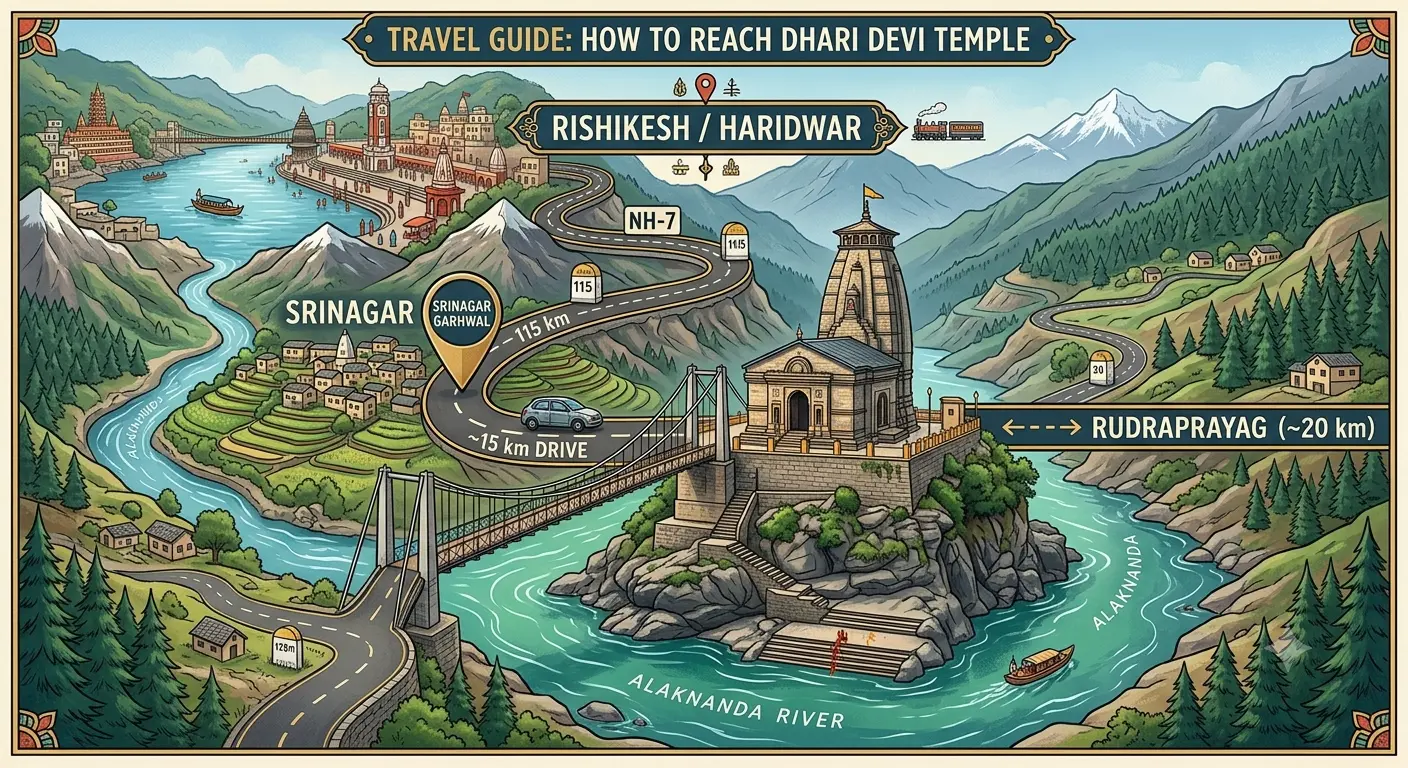
By Road: It is situated approximately 15 km from Srinagar Garhwal, 20 km from Rudraprayag, and 120 km from Rishikesh. Direct buses and shared taxis run frequently along the Rishikesh–Badrinath route.
By Train: The nearest major railway stations are Rishikesh and Yog Nagari Rishikesh (~120 km away).
By Air: The closest airport is Jolly Grant Airport in Dehradun, roughly 135 km from the shrine.
Essential Travel Tips for Pilgrims
Walking Pathway: Visitors walk across a paved bridge and pedestrian pathway over the Alaknanda River to reach the island-like shrine.
Timing for Darshan: Morning and evening aartis are deeply peaceful times to experience the divine energy of the shrine.
Respect Local Customs: Photography near the main idol is strictly restricted to preserve the sanctity of the shrine. Dress modestly and follow local temple etiquette.