Ukhimath: The Sacred Winter Abode of Lord Shiva in Uttarakhand
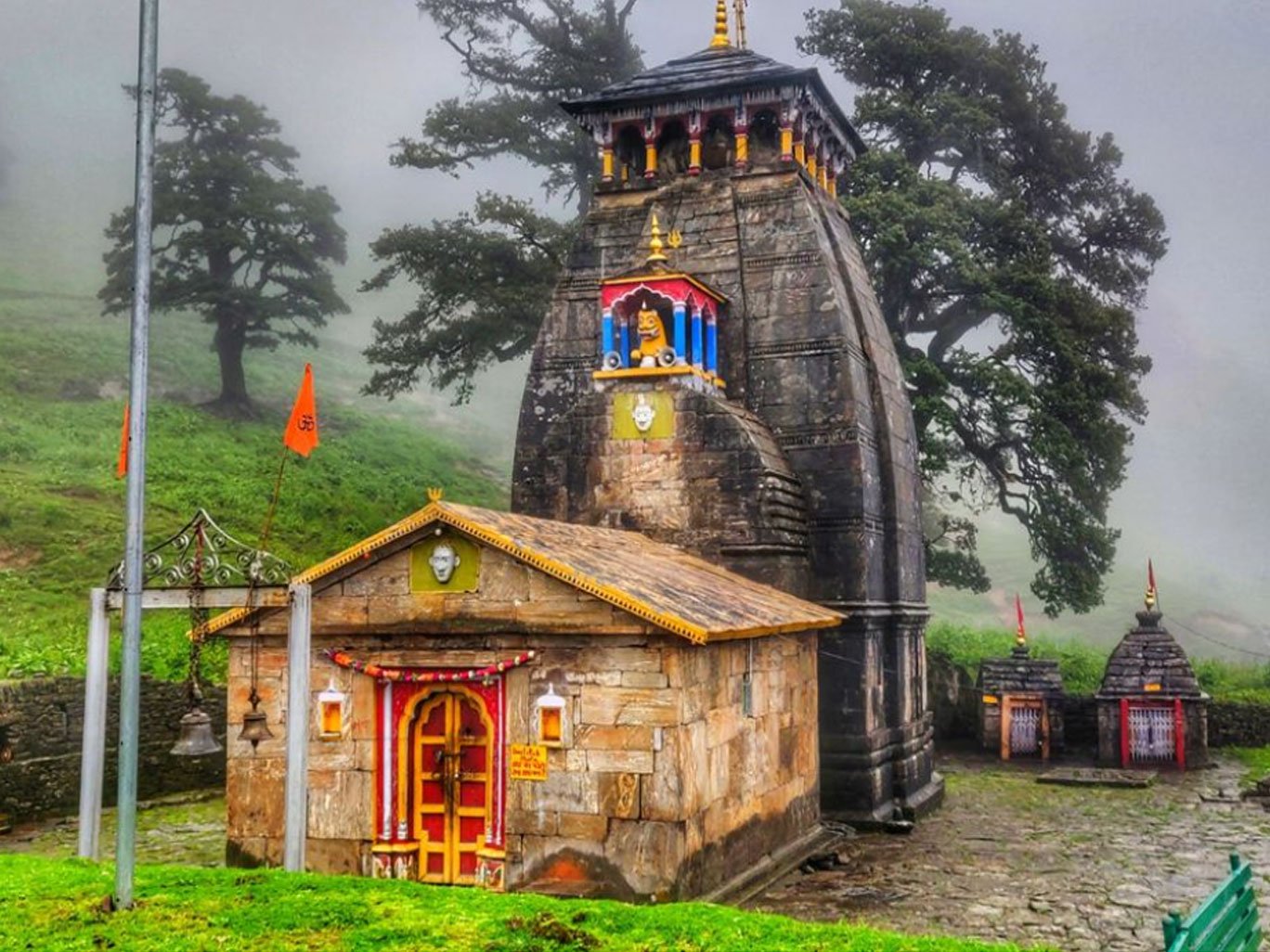
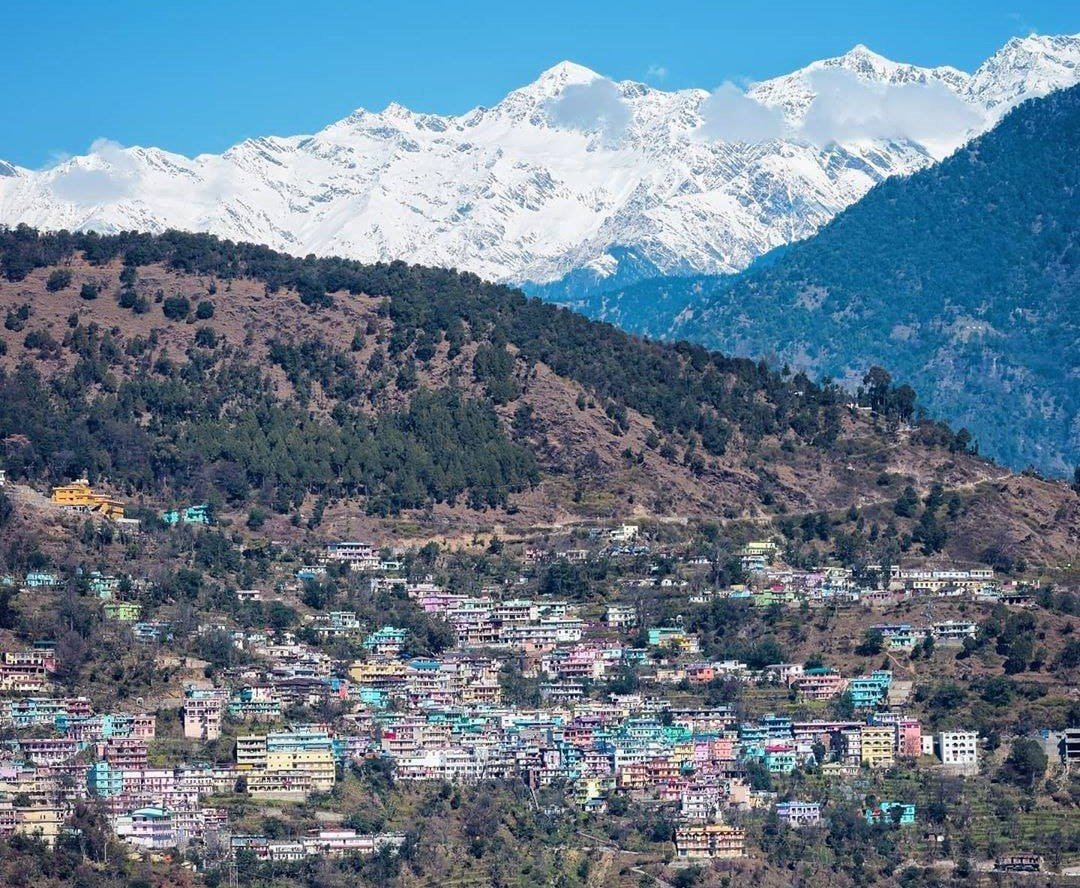
Tucked away in the serene Rudraprayag district of Uttarakhand, Ukhimath is more than just a tranquil Himalayan town. It is a place of profound spiritual significance, serving as the official winter seat of Lord Kedarnath and Lord Madhyamaheshwar. When heavy snow blankets the high-altitude shrines during the harsh winter months, the divine deities are brought down in a grand procession to find refuge in the sacred Omkareshwar Temple in Ukhimath.
For six months, this unassuming town transforms into the heart of devotional activity, making it a crucial stop for both pilgrims and travelers seeking a deeper connection with the divine. This complete guide explores everything you need to know about visiting Ukhimath.
Spiritual Significance: The Kedarnath Winter Seat
Ukhimath's primary identity is its role as the winter abode for two of the revered Panch Kedar shrines. This tradition ensures that devotion continues even when the high peaks are inaccessible.
The principal site of worship here is the Omkareshwar Temple. The temple complex, with its vibrant and traditional architecture, houses the Utsav Murtis (processional idols) of Lord Kedarnath and Lord Madhyamaheshwar from November through April. During winter, devotees visit Omkareshwar Temple to participate in the seasonal worship traditions associated with the high-altitude shrines.
Key Points for Pilgrims:
Omkareshwar Temple: The central shrine for winter worship.
Kedarnath Winter Seat: Where the deities reside when the Kedarnath temple is snowbound.
RAWAL Residence: Traditionally, the Rawals (head priests) of Kedarnath also reside in Ukhimath during the winter months.
Top Things to Do in and Around Ukhimath
While Ukhimath is steeped in spirituality, its location in the Garhwal Himalayas makes it an excellent base for exploring natural wonders and undertaking scenic treks.
1. Spiritual Immersion at Omkareshwar Temple
The heart of Ukhimath, this ancient temple is a must-visit. Admire the traditional Katyuri-style architecture, witness the daily rituals, and feel the powerful spiritual energy, especially when the deities of Kedarnath and Madhyamaheshwar are present.
2. Trek to the Pristine Deoria Tal
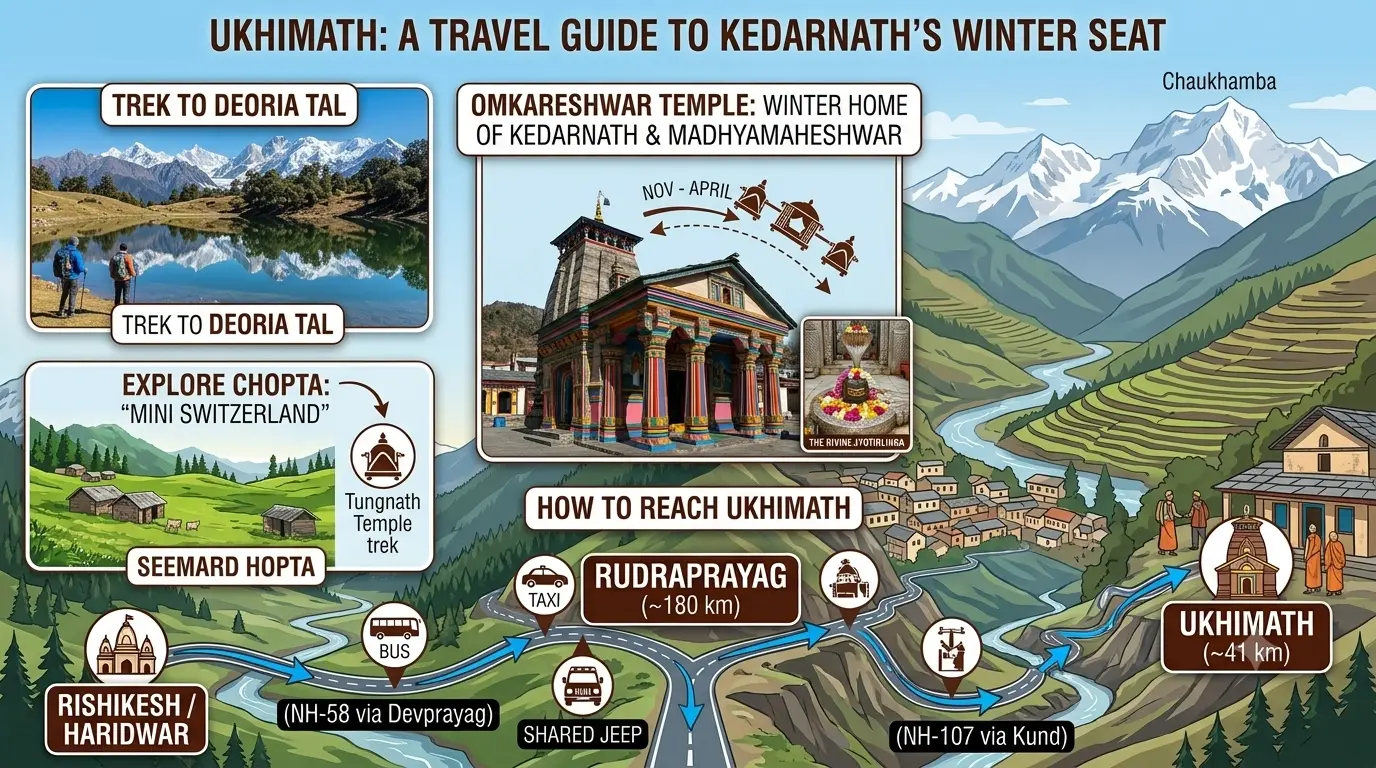
Just a few kilometers from Ukhimath, Sari village serves as the starting point for a short, scenic trek to Deoria Tal. This crystal-clear lake is perched at an altitude of 2,438 meters and is famous for its stunning reflections of the Chaukhamba and other snow-capped peaks. The trek is relatively easy and is a favorite among nature lovers and photographers.
3. Explore the Meadows of Chopta
Known as the "Mini Switzerland of India," Chopta is a breathtaking expanse of lush green meadows surrounded by dense forests. Located about 29 km from Ukhimath, it serves as the base for the trek to Tungnath (the highest Shiva temple in the world) and further up to Chandrashila Peak for panoramic views.
4. Visit Sari Village
Sari is a quaint, traditional Garhwali village that offers a glimpse into rural mountain life. It’s a perfect place to experience local culture and the starting point for the Deoria Tal trek.
Best Time to Visit Ukhimath
Ukhimath can be visited year-round, depending on what you wish to experience. The Ukhimath temperature remains pleasant to cold throughout the year.
Season | Months | Experience |
Winter | November to April | Best for Pilgrims. Witness the unique winter worship of Kedarnath and Madhyamaheshwar. Expect very cold temperatures and possible snowfall in surrounding areas. |
Spring/Summer | May to June | Best for Sightseeing and Trekking. Pleasant weather, ideal for Deoria Tal, Chopta, and surrounding trails. |
Monsoon | July to August | Avoid if possible. The region is prone to heavy rainfall and landslides, making road travel dangerous. |
Autumn | September to October | Excellent weather with clear skies and spectacular mountain views. Post-monsoon greenery is at its peak. |
How to Reach Ukhimath: Practical Travel Guide
Ukhimath is well-connected by road to major cities in Uttarakhand and is located on the popular Mandakini valley route.
Rishikesh to Ukhimath: The most common approach is from Rishikesh or Haridwar. The route primarily follows the picturesque NH-58, passing through towns like Devprayag (confluence of Alaknanda and Bhagirathi) and Rudraprayag.
Rudraprayag to Ukhimath: From Rudraprayag, the route shifts towards Ukhimath via Kund (approximately 41 km).
Distance: The total distance from Rishikesh is approximately 180 km, taking about 6-7 hours. Shared taxis, private cabs, and state-run buses operate frequently along this route.
How to Reach Ukhimath Summary:
By Road: Frequent buses and taxis from Rishikesh, Haridwar, and Dehradun.
By Train: The nearest major railway stations are in Rishikesh or Haridwar (~180-200 km).
By Air: The closest airport is Jolly Grant Airport in Dehradun (~195 km).
Essential Tips for Travelers
Accommodations: While Ukhimath is a town with a few guest houses and lodges, Sarri village and Chopta offer more budget-friendly and nature-centric options, including homestays and camping.
Weather: Always check the Ukhimath temperature and weather forecast before your trip, especially if visiting in winter or during monsoon. Pack appropriate layers.
Monsoon Travel: Landslides are common in Uttarakhand during the monsoons. Travel with caution and be prepared for potential delays.
Local Culture: Respect the local customs and dress code when visiting the Omkareshwar temple and other sacred sites.
Connectivity: Cell phone connectivity is generally good in Ukhimath town, but can be spotty on treks like Deoria Tal and Chopta.
Ukhimath is a sacred sanctuary that offers a unique blend of profound spiritual traditions and natural Himalayan beauty. Whether you are a devotee seeking the winter seat of Kedarnath or a traveler wishing to explore the meadows of Chopta and the waters of Deoria Tal, this humble town in Uttarakhand promises an unforgettable and soul-stirring experience.